

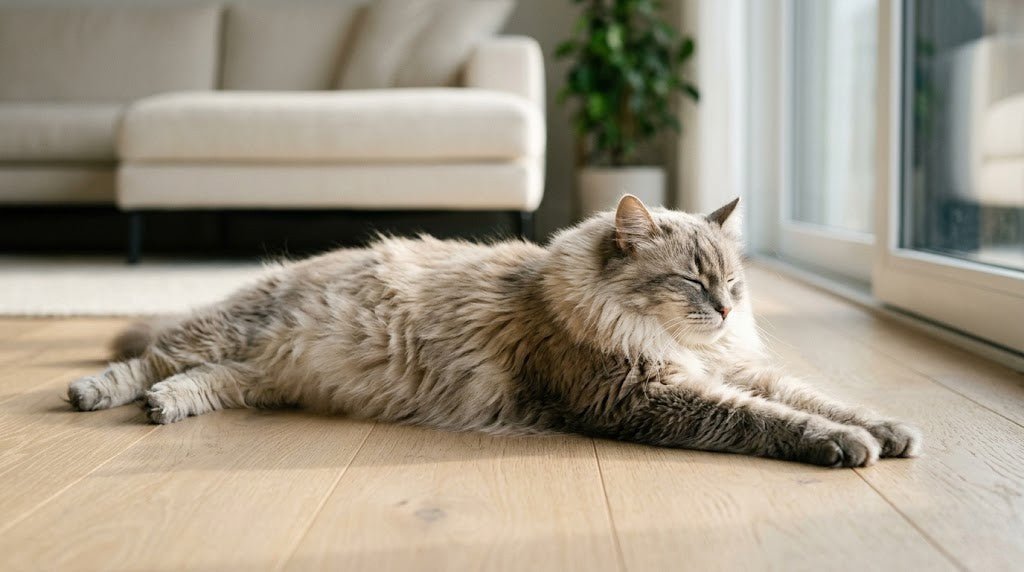
Watching your cat grow older is a deeply rewarding journey, filled with quiet companionship and a bond built over years. But as your cat ages, you may begin to notice your once-acrobatic feline friend slowing down. Perhaps they now prefer to snooze on the floor rather than surveying the room from the top of the highest bookshelf.
While it is tempting to chalk these changes up to "just getting old," a decrease in senior cat mobility is often the first whisper of a very real, and very treatable, medical condition: osteoarthritis. As a veterinarian, my goal is to help you look past the myth of normal aging and understand the science behind keeping older cats comfortable. By learning to recognize the subtle clues your cat's behavior is giving you, you can take practical, evidence-based steps to help your aging feline navigate their golden years with comfort and dignity.
The silent epidemic of feline osteoarthritis
When we think of arthritis, we typically picture a limping dog or a person struggling with a stiff knee. Yet osteoarthritis — the progressive breakdown of protective cartilage cushioning the ends of bones within joints — is extremely common in senior cats. Veterinary studies reveal that more than 61% of cats over the age of six show radiographic evidence of degenerative joint disease, and an astounding 90% of cats over twelve years old have visible evidence of joint deterioration on X-rays. Despite these figures, feline arthritis frequently goes undiagnosed.
The primary reason lies in feline evolution. Cats are masters at concealing pain and illness. In the wild, showing weakness makes an animal vulnerable — a survival instinct our domesticated "living room panthers" still strongly possess. Unlike dogs, senior cats with arthritis rarely display an obvious limp. Because many cats are naturally inactive for up to 80% of their day, even the most dedicated pet parents can easily miss a gradual decline in mobility.

How to spot joint pain in senior cats
Chronic pain in older cats rarely presents as crying or vocalizing. Instead, it manifests as subtle behavioral shifts that slowly alter your cat's daily routine. As a pet parent, watch closely for these indicators as your cat ages:
Reluctance to jump: senior cats experiencing joint pain often hesitate before leaping onto furniture, or may pull themselves up using their front claws rather than springing powerfully from their hind legs. Many senior cats will stop visiting favorite perches and favorite resting spots altogether, choosing lower, more accessible surfaces instead.
Changes in grooming habits: a cat with a stiff, painful spine or aching hips may stop grooming hard-to-reach areas, leading to a dull or matted coat. Conversely, some cats will obsessively over-groom a specific painful joint in an attempt to soothe the ache.
Litter box accidents: trouble accessing litter boxes with high sides can become genuinely painful for an arthritic cat. This discomfort may cause them to stop using the litter box entirely. Switching to low-entry litter boxes removes that daily obstacle entirely.
Mood and behavior changes: reduced activity, a decline in play sessions with favorite toys, or sudden irritability when being picked up can all signal that many senior cats are living with chronic, low-grade discomfort. Cognitive dysfunction, which also becomes more prevalent as a cat ages, can compound these behavior problems further.

Medical interventions and senior cat care
If you suspect your senior cat has mobility issues, the first step is a thorough veterinary examination to confirm joint disease and rule out other health conditions. Vet visits become essential during the senior years, as many cats also develop kidney disease, dental disease, weight loss, and muscle loss that can accelerate joint deterioration.
Managing your cat's weight is central to treating mobility problems. Excess body weight places additional stress on joints, worsening both pain and the progression of arthritis. Helping an overweight cat safely return to a healthy body condition can produce profound improvements in your cat's mobility and overall quality of life.
Your veterinarian may also prescribe non-steroidal anti-inflammatory drugs (NSAIDs) to reduce joint inflammation and discomfort. These must always be carefully monitored through regular blood tests to protect kidney and liver health.
Many senior cats benefit significantly from nutritional support as well. Diets and supplements enriched with Omega-3 fatty acidsfrom high-quality fish oil have been shown in clinical trials to improve mobility, activity levels, and jumping ability in cats with arthritis. Other valuable adjuncts include glucosamine, and chondroitin, A daily mobility supplement can deliver these ingredients conveniently.

Environmental adaptations every senior cat needs
Some of the most impactful changes you can make happen right in your own home. Thoughtful environmental adjustments reduce the physical demands placed on aging feline joints while allowing your senior cat to maintain their independence.
Begin with your cat's favorite resting spots. If your cat loves a sunny windowsill, provide pet stairs or a gentle ramp so they can reach it without jumping. Soft bedding in warm, draft-free areas does a great deal to soothe aching joints. Placing non-slip mats over slippery floors gives senior cats the confident traction they need to move safely.
For litter boxes, easy access is absolutely vital. Replace high-sided boxes with low-sided alternatives — or modify a plastic storage container by cutting a low entrance — so your geriatric cat can step in and out without stressing their hips or spine. Soft, fine litter is far gentler on sensitive paws than coarse pellets. Place food and water bowls — including water fountains and additional water stations — on a single level to eliminate the need for elderly cats to navigate stairs.
Consider adding night lights for any senior cat showing signs of hearing loss or cognitive dysfunction, as a reduced ability to orient in low light can cause distress and lead to behavior problems.

Exercise and mental stimulation for aging senior cats
Gentle interactive play supports both your cat's physical and mental health. How much exercise a senior cat needs will differ from that of a younger cat, but short play sessions remain genuinely beneficial. Use interactive toys such as feather wands to encourage gentle stretching and batting from a low surface, honoring your cat's hunting instincts without demanding high-impact movement. Scratching posts also offer real physical benefits — stretching the spine and encouraging healthy muscle engagement.
A consistent exercise routine keeps senior cats mentally and physically engaged. Gentle interactive play, delivered through multiple short play sessions throughout the day, provides meaningful mental stimulation alongside the physical benefits of movement.

Giving your senior cat the life they deserve
Aging is natural, but living in pain is not inevitable. By understanding how your cat communicates discomfort and recognizing that reduced senior cat mobility is a medical issue — not simply a fact of age — you have the power to meaningfully improve your companion's quality of life. Through close observation, consistent vet visits, targeted senior cat care, and thoughtful adaptations to your home environment, you give your cat every opportunity for comfort and joy as they enter their senior years. Never hesitate to share even the most subtle changes with your pet health experts — together, you are your cat's greatest advocate.

Dr. Stefan Novevski
Dr. Stefan Novevski is a licensed veterinarian at a small animal clinic specializing in internal medicine, reproduction, dermatology, nutrition, and animal welfare, who continuously updates his expertise through professional development and international clinical experience while prioritizing client education for optimal pet health outcomes.
The information in this article is based on the following scientific publications:
- Elliott, J., & Grauer, G. (Eds.). (2006-2007). BSAVA Manual of Canine and Feline Nephrology and Urology (2nd ed.). BSAVA Publications.
- Villiers, E., & Blackwood, L. (Eds.). (2005). BSAVA Manual of Canine and Feline Clinical Pathology (2nd ed.). BSAVA Publications, Gloucester
- Horwitz, D. F., & Mills, D. S. (Eds.). (2009). BSAVA Manual of Canine and Feline Behavioural Medicine (2nd ed.). BSAVA Publications, Gloucester
- Harvey, A., & Tasker, S. (Eds.). BSAVA Manual of Feline Practice: A Foundation Manual. BSAVA Publications
- Rendle, M., & Hinde-Megarity, J. (Eds.). (2022). BSAVA Manual of Practical Veterinary Welfare (1st ed.). BSAVA Publications.
Looking for a solution? Start here
Stylla Mobility for cats
Supports mobility and active lifestyle
- Helps maintain healthy joints and mobility
- Supports cartilage and connective tissue function
- Encourages an active lifestyle
Made in Switzerland with strict quality standards


