

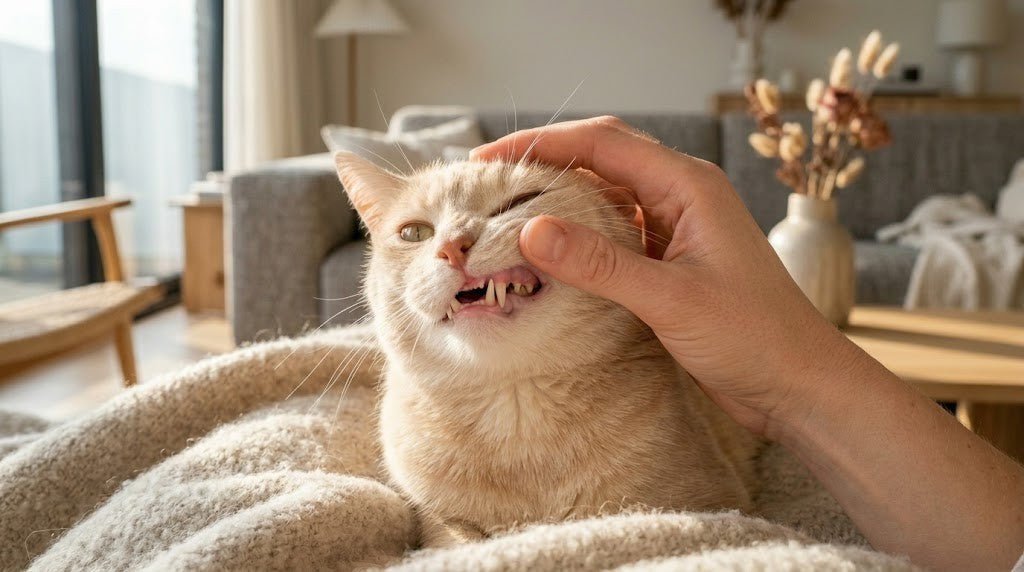
Have you ever leaned in for a snuggle with your cat, only to be met with breath that stops you in your tracks? While it is easy to joke about "tuna breath," bad breath in feline friends is often the first visible sign of a deeper dental problem. As a veterinarian, one of the most common issues I see is dental disease. In fact, by the time they reach just two years of age, approximately 70 percent of adult cats already have some form of periodontal disease. Understanding the importance of your cat's dental health is the first step toward protecting it.
Good feline dental health is deeply connected to your cat's well-being. Untreated dental problems can cause chronic oral pain and allow bacteria to enter the bloodstream, potentially affecting organs like the kidneys, liver, and heart. My goal is to help you understand what is happening inside your cat's mouth, how your veterinarian addresses it, and what you can do at home to help your pet live a long, healthy, pain-free life.
Summary
Why your cat's dental health is easy to miss
If your cat's mouth hurts, they will likely never tell you. In the wild, showing pain makes an animal vulnerable, so domestic cats have evolved to expertly mask their discomfort. Most cats will simply swallow kibble whole or chew on the other side of the mouth to avoid a sore spot—so the fact that your pet is still eating does not mean their teeth and gums are fine—hidden disease can lurk behind a normal-looking bite.
Bad breath—medically known as halitosis—is the most common sign cat owners notice, and it is driven by bacteria thriving in diseased tissue. Watch carefully for these subtle signs of your cat's oral health deteriorating:
Red, swollen, or bleeding gums
Dropping food from the mouth, or a sudden preference for soft food
Increased drooling, sometimes tinged with blood
Pawing at the mouth or resisting having their face touched
Tooth chattering when the jaw is touched
Early intervention is central to effective dental care for your cat's dental health. Catching these subtle signs before dental disease advances can spare your cat significant suffering and prevent the need for far more invasive additional treatment later.

The big three: Common feline dental problems
Periodontal disease: How plaque and tartar buildup threaten your cat's teeth
Tooth resorption: The silent threat in older cats
Unlike humans, cats do not generally develop tooth decay from sugar-fermenting bacteria. Instead, they suffer from tooth resorption—a disease affecting up to 75 percent of cats over the age of five. Your cat's own body activates cells called odontoclasts that mistakenly dissolve the tooth structure from the inside out. Think of it like a pothole forming beneath a paved road; eventually, the surface caves in. You might notice a pink, fleshy bump of gum tissue growing over the tooth to protect the defect, or your cat sticking their tongue out due to oral discomfort. Because the tooth essentially disintegrates, extraction is the only effective additional treatment. Tooth loss from resorption is painful and progressive, making routine cleaning, dental cleaning, and regular dental visits essential for older cats.
Feline chronic gingivostomatitis (FCGS)
Often called stomatitis, FCGS is characterized by widespread, severe inflammation of the soft tissues in the mouth, extending well into the back of the throat. The most widely accepted theory is that it is an immune hypersensitivity reaction: your cat's immune system aggressively overreacts to the normal bacteria present in dental plaque. Many cats with stomatitis are so uncomfortable they refuse to eat, lose weight, stop grooming, and drool excessively. Maintaining good feline dental health through professional dental cleaning and your cat's dental hygiene routine at home is critical to managing this severe disease.

Why anesthesia is essential for professional dental cleaning
When I diagnose a dental issue, the next step is a Comprehensive Oral Health Assessment and Treatment (COHAT)—a professional dental cleaning carried out under general anesthesia. You may wonder why your cat needs to be fully sedated when you stay perfectly awake at the human dentist.
The answer comes down to anatomy and patient safety. A cat cannot understand the need to stay still and open wide. Because most gum disease develops beneath the gum line, a thorough cleaning of this sensitive area is simply impossible in an awake pet. Full-mouth dental X-rays are essential for evaluating each of your cat's teeth for bone loss, hidden fractures, or resorption—exactly what your dental hygienist would tell you must never be skipped. Only dental X-rays reveal the complete picture of your cat's dental issues. Taking these images accurately and safely, while using sharp scaling instruments for a thorough cleaning, requires a completely still, deeply sleeping patient.
While anesthesia may feel daunting, veterinary medicine has made remarkable advances in safety and monitoring. We use tailored pain management, including local nerve blocks similar to the numbing injections your dentist uses, to ensure your cat wakes up comfortable and pain-free. Please be wary of "anesthesia-free dentistry" services: they only scrape the visible portions of your cat's teeth, leaving dangerous tartar buildup below the gum line. This approach offers a cosmetic result with no meaningful benefit to your cat's oral health.

Home cat dental care: Your role in keeping your cat's teeth clean
Why brushing is the gold standard for dental hygiene
How to brush your cat's teeth: A step-by-step routine
Brushing your cat's teeth can feel intimidating, but most cats adapt with patience and a gradual routine:
Start slow: gently rub your cat's muzzle and lips with your fingers for a few days, rewarding them with a high-value treat after each session.
Add texture: progress to rubbing the cat's teeth and gum line with gauze or a finger brush dipped in tuna water.
Introduce the toothbrush: move on to a soft bristled toothbrush or a toddler's brush—once your cat is comfortable. A soft-bristled toothbrush is gentler on sensitive gums and teeth and is the safest choice for keeping your cat's teeth clean.
Use the right toothpaste: always use veterinary toothpaste. Human toothpaste contains fluoride and detergents that can cause toxicity in pets if swallowed. Even a kitten should never be exposed to human toothpaste. Using the correct toothpaste every session protects your cat's oral health and keeps the brushing safe.
Don't force your cat to sit still for brushing. This could cause unnecessary stress and they may even bite or scratch you.
When brushing isn't possible: Water additives, dental treats, and more
If your cat absolutely refuses the brush, you still have excellent options. Look for dental diets, water additives, and dental treats that carry the Veterinary Oral Health Council (VOHC) Seal of Acceptance. The VOHC independently reviews products to confirm they genuinely reduce plaque and tartar in pets, making it easier for pets' owners to choose wisely. Water additives suit pets who resist direct brushing. A dental diet provides mechanical cleaning with every meal—ideal for pets who skip brushing—as a practical supplement to any schedule. These tools do not replace brushing, but they are valuable for maintaining your cat's oral health and maintaining clean teeth and fresh breath between dental cleaning appointments and regular dental visits.
For older cats or pets already showing dental problems, a consistent home routine combined with regular professional dental check-ups makes the greatest difference. Even cleaning your cat's teeth a few times per week—focusing on the back teeth and gum line—is a meaningful, healthy step.

Prevent dental disease before it starts
Dental disease is a silent epidemic in the feline world—but it is highly preventable when caught early. By learning to recognize the hidden signs of dental pain, partnering with your veterinarian for comprehensive dental cleaning, and committing to your cat's dental care routine at home, you can protect your cat's overall health and well being for years to come.
I encourage you to gently lift your cat's lip today. If you see red gums or smell a foul odor, please schedule an exam or consult with pet health experts for guidance. Together, we can ensure your feline companion enjoys a lifetime of comfortable, healthy purrs.

Dr. Ingrid De Wet
Dr. De Wet brings 15 years of small animal expertise to personalized veterinary care through in-clinic work and emergency teleconsultations, contributing to pet health education while drawing on personal experience as a pet owner to understand the emotional and practical aspects of pet healthcare.
The information in this article is based on the following scientific publications:
- Elliott, J., & Grauer, G. (Eds.). (2006-2007). BSAVA Manual of Canine and Feline Nephrology and Urology (2nd ed.). BSAVA Publications.
- Villiers, E., & Blackwood, L. (Eds.). (2005). BSAVA Manual of Canine and Feline Clinical Pathology (2nd ed.). BSAVA Publications, Gloucester
- Horwitz, D. F., & Mills, D. S. (Eds.). (2009). BSAVA Manual of Canine and Feline Behavioural Medicine (2nd ed.). BSAVA Publications, Gloucester
- Harvey, A., & Tasker, S. (Eds.). BSAVA Manual of Feline Practice: A Foundation Manual. BSAVA Publications
- Rendle, M., & Hinde-Megarity, J. (Eds.). (2022). BSAVA Manual of Practical Veterinary Welfare (1st ed.). BSAVA Publications.
Looking for a solution? Start here
Stylla Mobility for dogs
Supports mobility and active lifestyle
- Helps maintain healthy joints and mobility
- Supports cartilage and connective tissue function
- Encourages an active lifestyle
Made in Switzerland with strict quality standards


