

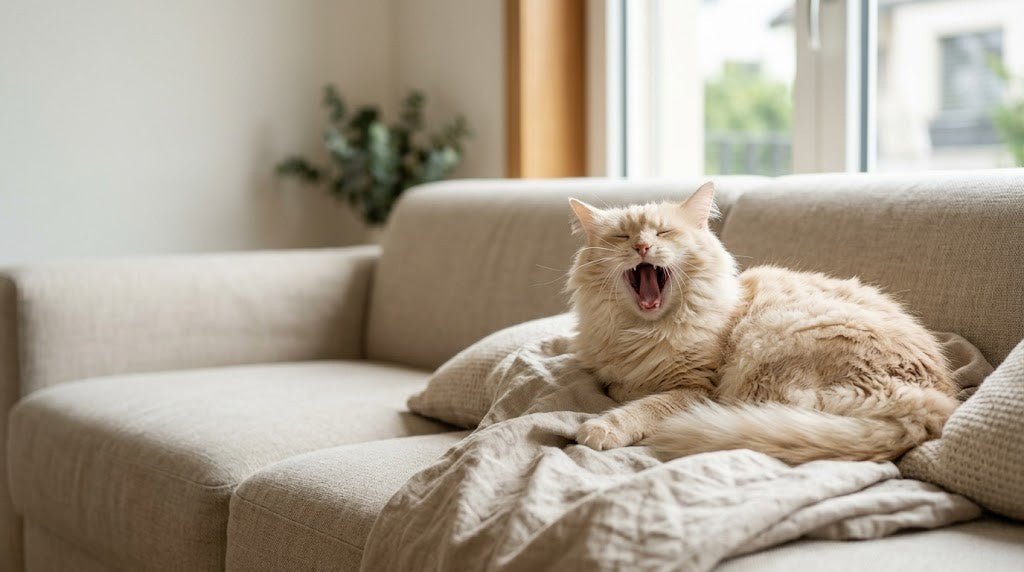
There is nothing quite like the quiet comfort of a cat curled up on your lap, purring softly. But when your feline friend leans in for a cuddle and yawns, that warm moment can be cut short by a smell that makes you want to pull away. Most cat parents associate bad breath with normal "kitty breath," simply accepting it as an unavoidable part of living with a cat. As a veterinarian, though, I can tell you that cat bad breath — medically known as halitosis — is not normal at all.
In fact, persistent bad breath is usually the very first distress signal your cat's body is sending about an underlying, preventable condition. Understanding why your cat's breath smells bad is the first step toward protecting your pet's comfort and quality of life. While this article does not constitute medical advice, it will help you recognize the warning signs and take informed action.
Summary
What causes cat bad breath? The role of dental disease
When a cat has bad breath and is brought into the clinic, the most common cause of bad breath we identify is dental disease linked to periodontal disease. This inflammatory condition attacks the tissues surrounding and supporting the teeth. It is remarkably prevalent: by just two years of early age, 70% of adult cats already show some form of this condition, and most cats will experience it during their lifetime.
The process begins invisibly. Plaque, a sticky film of bacteria, constantly forms on the teeth. If food particles and plaque are not brushed away, minerals in the cat's saliva harden that plaque into tartar. This tartar buildup is where the real trouble starts. As bacteria slip beneath the gumline, they break down surrounding gum and bone tissues, releasing volatile sulphur compounds — the very same chemicals responsible for the smell of rotten eggs. These compounds are what make your cat's breath stink with that deeply offensive odor. If left untreated, this progressive condition leads to painful inflammation, gum recession, bone loss, tooth loss, and eventually cat's teeth falling out entirely.

Beyond plaque: Other dental problems that affect cats
While oral disease is the most frequent culprit, cats are also uniquely prone to other painful oral health problems that cause bad breath in cats. One of the most common is tooth resorption. Acting almost like a pothole developing in the tooth structure, tooth resorption is astonishingly widespread — it can affect cats over the age of five at rates up to 75%. These lesions gradually eat away at the tooth enamel, exposing the sensitive inner nerve and causing significant pain.
Another severe condition is feline chronic gingivostomatitis, often called stomatitis. This extremely painful disease is characterized by widespread inflammation of the gums and soft tissues at the back of the cat's mouth. The exact cause remains somewhat unclear, but it is widely believed to be an overreactive immune response to plaque bacteria. Cats experience intense pain from stomatitis — common symptoms include drooling, pawing at their mouths, bleeding gums redness, swollen gums, dropping food, eating inability, or choosing to avoid food altogether. Any of these oral concerns warrants prompt veterinary attention.
Systemic causes: When bad breath in cats is not from the teeth
Though dental concerns account for stinky cat breath in most cases, sometimes bad breath opens a window into your cat's internal organ health. If a cat is suffering from kidney disease, toxins normally filtered by the kidneys accumulate in the bloodstream. This can lead to oral ulcers and a distinctive type of bad breath known as "uremic breath," which can smell bad — faintly of urine. Kidney disease abscess and sores kidney disease abscess formations in the mouth only make the pet's condition more uncomfortable.
Similarly, a cat suffering from kidney or liver disease, or unregulated diabetes, may develop unusually sweet or fruity-smelling breath. In diabetes, the cat's body begins breaking down fat and producing ketones when it cannot properly use glucose for energy. Additionally, gastrointestinal disorders or respiratory infections can also cause a cat's breath smells foul. This is precisely why a comprehensive veterinary examination and accurate diagnosis are so critical — we need to rule out these systemic causes before addressing bad breath as purely a dental issue.

How to recognize the warning signs of cat bad breath
Many cat owners wonder how to tell whether bad cat breath signals something serious. Here are the gums behavioral cues and oral symptoms to watch for: persistent bad breath in cats that does not improve, appetite bad breath changes such as refusing meals, visible plaque and tartar along the gumline, red or bleeding gums, and your cat's teeth regularly appearing discolored. If your cat's breath smell bad on a consistent basis, or if you observe any potential dental concerns such as oral discomfort, dropping food, or hard to reach plaque accumulating along the back teeth, schedule an oral examination with your veterinarian right away.
When your cat has bad breath that persists, a professional evaluation helps distinguish routine dental concerns from deeper issues or systemic illness. An accurate diagnosis ensures that cat bad breath treatment targets the true cause, whether that is dental disease or another underlying condition.
Professional dental cleanings: The veterinary solution
When you bring your cat in to address bad breath, we perform a Comprehensive Oral Health Assessment and Treatment (COHAT) — not just a routine cleaning. This procedure requires general anesthesia. I understand that anesthesia can cause anxiety for many pet owners, but it is absolutely essential for safe veterinary dental care.
Consider what happens at your own dentist: you sit still, open wide, and speak up if something hurts. Our feline friends enjoy no such ability. A cat requires anesthesia so we can use ultrasonic scaling instruments safely near delicate gum tissues. Because treating bad breath often means reaching disease hidden below the gumline, it is simply impossible to clean these areas while a cat is awake.
Furthermore, full-mouth dental X-rays — essential for evaluating the roots of your cat's teeth and the surrounding jawbone — cannot be taken on an awake patient. Dental cleanings under anesthesia allow us to perform tooth extractions when necessary and treat cats teeth multiple times throughout their lives as needed.
Attempting to scrape tartar off visible teeth in an awake pet — sometimes marketed as "anesthesia-free dentistry" — is both stressful and misleading, as it completely misses hidden disease. It leaves the true source of bad breath untreated and may even worsen the pet's condition.

Maintaining good oral hygiene at home
Once your cat has a clean, pain-free mouth after professional care, the baton passes to you. Prevention is every bit as vital as treatment, and without at-home plaque control, dental problems will inevitably return. The good news? There are many practical ways you can support your feline friend's oral hygiene right from your living room.
Regular teeth brushing — the gold standard: the mechanical action of brushing is the single most effective way to remove daily plaque before dental problems develop. With patience, even most cat parents find success. Start at an early age if possible — begin by simply rubbing your cat's muzzle and offering praise. Once your cat is comfortable, use a special toothbrush or finger brush designed for pets. Always use veterinary toothpaste; human formulas are not safe if swallowed. Brushing your cat's teeth a few times per week can dramatically improve your cat's oral hygiene.
Dietary defense and a balanced diet: what a cat eats matters more than you might think for oral health. If your cat absolutely refuses the toothbrush, specially formulated dental diets use a unique kibble matrix designed to help. As your cat eats, the kibble acts like a squeegee, wiping plaque off the tooth surface. A high quality diet also supports overall well-being by reducing food particles that contribute to bacterial growth.
Approved dental treats and chews: certain treats designed for dental health are proven to reduce tartar. Look for the Veterinary Oral Health Council (VOHC) seal — products bearing it have undergone rigorous testing to prove they slow plaque accumulation. These are especially helpful for feline friends enjoy chewing but resist brushing.
Water additives: veterinary-approved water additives help decrease the bacterial load in the mouth, supporting fresher breath with a simple, hands-off approach. Oral hygiene taking care of your cat's mouth daily makes a meaningful difference over time.
When does your cat need ongoing professional care?
Even with diligent home care, most cats benefit from routine cleaning by a veterinarian at regular intervals. Professional cleanings remove hard to reach plaque and tartar that brushing alone cannot address. If your cat requires it, your veterinarian may recommend a special toothbrush for at-home use between visits, or additional treatments tailored to the cat's specific dental problems.
Cats experience dental issues at varying rates. Some need professional care annually, while others may go longer between visits. Monitoring your cat's breath, watching for changes in behavior around mealtimes, and maintaining good oral hygiene all help you stay ahead of potential dental concerns.

Protecting your feline friend from bad breath in cats
Your cat's bad breath is far more than a minor nuisance — it is a clear signal that something in your cat's health needs attention. By recognizing that stinky cat breath is a medical issue and not simply "normal," you are taking a crucial step toward protecting your pet's well-being. Whether the cause is dental disease, painful tooth resorption, or a systemic condition, veterinary science has the tools to diagnose and treat the problem effectively. This article does not constitute medical advice — always consult your veterinarian for concerns specific to your pet. If you have questions about your cat's dental health between veterinary visits, you can also consult with pet health experts for personalized guidance.
I encourage you to gently lift your cat's lip today and take a peek. If you notice bad breath, red gums, or visible tartar, schedule an appointment for a comprehensive oral examination. Together, we can banish bad breath, prevent tooth loss, and ensure your cat's oral health remains strong for years to come.

Dr. Ingrid De Wet
Dr. De Wet brings 15 years of small animal expertise to personalized veterinary care through in-clinic work and emergency teleconsultations, contributing to pet health education while drawing on personal experience as a pet owner to understand the emotional and practical aspects of pet healthcare.
The information in this article is based on the following scientific publications:
- Elliott, J., & Grauer, G. (Eds.). (2006-2007). BSAVA Manual of Canine and Feline Nephrology and Urology (2nd ed.). BSAVA Publications.
- Villiers, E., & Blackwood, L. (Eds.). (2005). BSAVA Manual of Canine and Feline Clinical Pathology (2nd ed.). BSAVA Publications, Gloucester
- Horwitz, D. F., & Mills, D. S. (Eds.). (2009). BSAVA Manual of Canine and Feline Behavioural Medicine (2nd ed.). BSAVA Publications, Gloucester
- Harvey, A., & Tasker, S. (Eds.). BSAVA Manual of Feline Practice: A Foundation Manual. BSAVA Publications
- Rendle, M., & Hinde-Megarity, J. (Eds.). (2022). BSAVA Manual of Practical Veterinary Welfare (1st ed.). BSAVA Publications.
Looking for a solution? Start here
Stylla Mobility for dogs
Supports mobility and active lifestyle
- Helps maintain healthy joints and mobility
- Supports cartilage and connective tissue function
- Encourages an active lifestyle
Made in Switzerland with strict quality standards


