

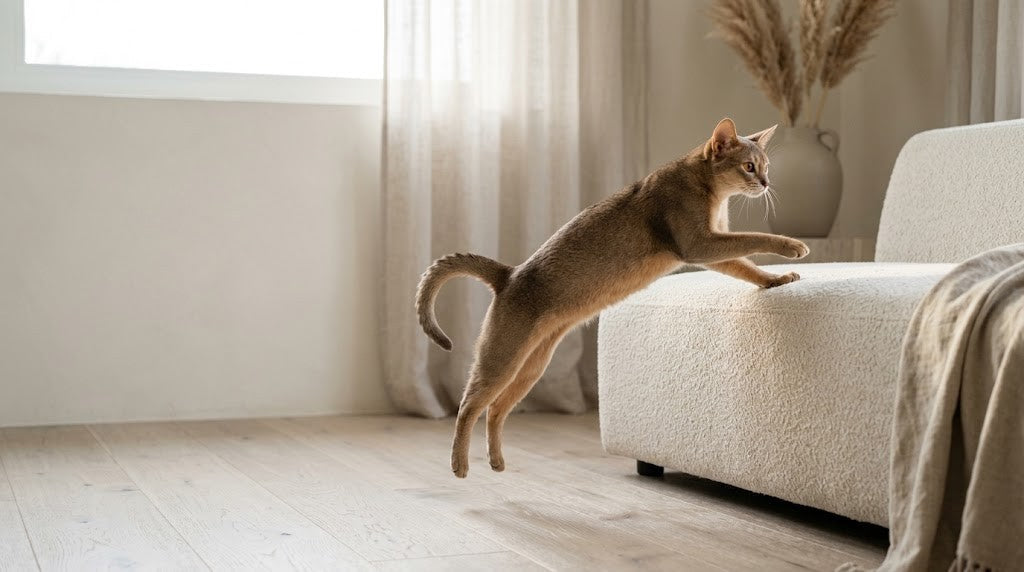
As a veterinarian, I hear it constantly from worried cat owners: "My cat is just slowing down because she is getting older." Watching our graceful feline friends turn into napping champions who hesitate before hopping onto the sofa is one of the quiet heartbreaks of feline aging. While cats age, this "slowing down" is often not normal aging — it is a quiet cry for help. Joint discomfort is a silent epidemic, and reduced mobility, joint stiffness, and joint pain are some of the most under-recognized signs of suffering in cats. We will explore collagen for cats and pets, including the role of collagen peptides and undenatured UC-II in joint health, and how the right collagen supplements can help your feline companion regain their youthful spring while supporting overall feline health.
Summary
The silent epidemic of feline joint disease
To understand why collagen matters, we first need to look at the joints it protects. Osteoarthritis is a degenerative condition where the protective bones and cushioning slowly wears down. Many people associate joint disease with dogs only, but it is incredibly common in cats too. A cross-sectional study of cats over six years of age revealed that 61% had degenerative joint disease . This condition most frequently affects vertebrae (spine), elbows, hips, shoulders, and ankles . Osteoarthritis in cats is often a primary condition, without an obvious underlying injury, becoming more frequent and severe as cats age .
Unlike dogs, who might visibly limp when their joints ache (common in dogs), cats are masters at hiding pain. In nature, showing sickness attracts predators, so cats mask discomfort . Instead of a limp, you might notice your cat becoming unusually passive . A decrease in their ability to jump and climb is the most common sign of trouble in pets . Your cat may hesitate before jumping onto a perch, or react with aggression when you touch a sensitive area . A cat's body condition also affects joint health; obese cats are nearly five times as likely to develop lameness . Osteoarthritis severity is not strictly linked to body condition, so slim cats can suffer too .
Recognizing reduced mobility in active cats and older cats
Active cats are the easiest to misjudge. A playful cat that abandons its toys is telling you something. In older cats, mobility problems creep in: shorter jumps, longer naps, hesitation on stairs. Cats requiring help to get onto furniture, or pets showing any other behavioural change, deserve a closer look. The earlier you spot reduced mobility, the more options you have to maintain healthy joints in pets.

What exactly is collagen and why does it matter for pets?
When osteoarthritis strikes, the cartilage inside the joint is slowly destroyed. Cartilage is the rubbery tissue that lets joints glide effortlessly. Its primary structural block is type II collagen — the scaffolding that absorbs the shock of a cat landing a six-foot jump.
Collagen is the most abundant protein in a cat's body — about 30% of total protein content. It plays a crucial role in skin, bones, tendons, ligaments, muscles, and other connective tissues. Connective tissues, joints, tendons, and muscles all rely on collagen to stay elastic and resilient. As cats age, natural production declines — leading to joint stiffness and arthritis. That is why collagen supplementation is increasingly recommended to support joint health, maintain skin health, and improve overall health for dogs and cats.
When we talk about collagen supplements for pets, not all collagen is created equal. The pet industry is flooded with various forms of nutraceuticals — food-derived products that offer health benefits. However, standard collagen supplements are often "denatured": the proteins have been broken down and broken into peptides by heat or chemicals during processing. While denatured collagen can provide basic amino acids for the body to use as building blocks, it works differently from UC-II: hydrolyzed peptides supply building blocks for cartilage, while UC-II acts through the immune system.

Types of collagen for pets
Type I collagen for skin, bones, and connective tissues
Type II collagen for joint support
Bovine collagen and collagen peptides

The fascinating science of UC-II
So how does feeding a protein help rebuild your cat's joints? The mechanism behind UC-II is a beautiful example of the immune system at work.
When a cat consumes traditional, denatured collagen, stomach acids simply digest it into basic nutrients. UC-II is entirely different. Because its complex structure is preserved, it survives the harsh environment of the stomach and crosses into the intestinal mucosa, the lining of the gut . There, it meets a specialized group of immune sentinels known as dendritic cells . Dendritic cells are communication officers; they sample the gut and relay messages to the immune system.
When intestinal dendritic cells recognize intact UC-II collagen peptides, they trigger oral tolerance — training the immune system to stop attacking the body's own tissues. In cats with this joint disease, the immune system is causing inflammation and breaking down collagen within the joints. The interaction between UC-II and dendritic cells activates molecular reactions 5, signaling regulatory T cells to release anti-inflammatory substances .
These healing substances include interleukin-4, interleukin-10, and transforming growth factor-beta (TGF-β) . Interleukins dial down skin inflammation and joint discomfort. TGF-β acts as a biological construction foreman, stimulating repair of damaged joint tissue . By introducing the supplement through the digestive tract to support feline joints, we gently persuade the immune system to shift from destruction to healing . This is why UC-II is a cornerstone of joint support strategies for pets with joint disease — protecting healthy joints in many pets and aging joints in others.

Beyond joints: Collagen for healthy skin, shiny coat, and overall well being
Although joint health gets most of the attention in the pet industry, the potential benefits of collagen extend much further. Collagen supplementation can improve skin hydration and elasticity, helping prevent flakiness and a dull coat. It supports the production of sebum, which keeps the skin moisturized and acts as a natural skin barrier. Collagen also provides structural support to hair follicles, ensuring fur grows strong, preventing breakage and promoting a lustrous, shiny coat across many pets. The benefits to skin health add up quickly.
The amino acids found in collagen — particularly glycine and proline — are essential for cellular repair and contribute to feline health from the inside out. Beyond skin, bones, coat, and digestive lining, collagen supplementation can support digestion, enhance immune function, and contribute to overall well being and healthy aging. The same essential amino acids that maintain cartilage also help a cat's immune system fight infections and maintain feline health long-term, which is why incorporating collagen makes sense for so many pets.
For cats with limited mobility or chronic joint stiffness, this whole-body benefit is transformative. A cat that moves comfortably grooms thoroughly, eats reliably, engages readily, and shows visible well being — all benefits feeding back into a happier life.

Choosing the right collagen supplements for your cat
Forms: Collagen powder, treats, capsules, and liquids
How much collagen can you give a cat?
The recommended dosage depends on weight and product, but most patented UC-II formulations sit between 10 and 40 milligrams per day for cats — a fraction of senior dogs and other dogs in general. Always follow the recommended dosage on the label, especially if your cat has pre-existing conditions or allergies. Avoid scaling up a product designed for human consumption.
Reading labels: Only ingredient, crude protein, crude ash, inactive ingredients
When to involve your vet
When choosing collagen supplements, products formulated for cats with pre-existing conditions deserve extra attention. Allergic reactions to collagen peptides are uncommon, but cats with known protein allergies should be transitioned cautiously. If your cat shows persistent joint pain, severe joint problems, or sudden changes in mobility, partnering with your veterinarian — and following the veterinarian's lead — on imaging or pain management — alongside incorporating collagen into the routine — supports the best outcome. Quality control matters across the supplements industry; not all joint supplements or collagen supplements among the many supplements contain the undenatured form, and substituting a denatured product will not initiate that vital immune response in the gut .

Practical tips for incorporating collagen and complementary nutrients
Cats are creatures of habit, and incorporating collagen into daily life is easiest when it blends with what they already enjoy. Sprinkle collagen powder over wet food, mix it into a small spoon of bone broth, or use treats featuring collagen peptides as a primary ingredient. Combining collagen supplements with fish oil supplements — which provides omega-3 fatty acids — can further support skin, coat, joints, and bones. Some pet parents also rotate functional foods alongside their cat's regular diet to deliver a steady supply of amino acids and protein. The combined health benefits accumulate over weeks.
Active cats and older cats benefit equally for different reasons: younger cats build resilience, while older cats slow arthritis progression and protect healthy joints. As types of collagen products become more widely available across pet supplements, fortified foods, and dental treats, choosing products tested by reputable manufacturers — with reviews from a verified buyer base — becomes more important than ever for both dogs and cats. The benefits of feline-specific supplements increase when paired with regular check-ups with your veterinarian for joint health, healthy weight management, and gentle play that keeps joints and muscles engaged.

Conclusion: Empowering your feline friend
Watching cats age does not mean passively accepting decline of their joints and mobility. Feline joint disease (OA) affects the majority of senior cats, often hiding behind subtle behavioral changes like reluctance to jump, climb, or be petted . While we cannot turn back the clock for our cats' joints, advances in veterinary nutraceuticals — especially collagen supplements that maintain joints, bones, tendons, and muscles — give us powerful supplements to support aging joints and overall health for many pets and other pets.
UC-II represents a fascinating leap forward in joint care for pets. By working with your cat's immune system through the gut, it reduces inflammation and encourages repair of damaged joint tissue . If you suspect your cat is slowing down or showing joint pain, schedule a wellness visit with your veterinarian. Discuss whether collagen supplementation is right for your pet, or speak to our pet health experts. With the right medical support, nutrition, and observation at home, you can empower your cat to enjoy their golden years with comfort, mobility, and grace — the benefits collagen for cats delivers across every stage of feline health.

Dr. Ingrid De Wet
Dr. De Wet brings 15 years of small animal expertise to personalized veterinary care through in-clinic work and emergency teleconsultations, contributing to pet health education while drawing on personal experience as a pet owner to understand the emotional and practical aspects of pet healthcare.
The information in this article is based on the following scientific publications:
- Elliott, J., & Grauer, G. (Eds.). (2006-2007). BSAVA Manual of Canine and Feline Nephrology and Urology (2nd ed.). BSAVA Publications.
- Villiers, E., & Blackwood, L. (Eds.). (2005). BSAVA Manual of Canine and Feline Clinical Pathology (2nd ed.). BSAVA Publications, Gloucester
- Horwitz, D. F., & Mills, D. S. (Eds.). (2009). BSAVA Manual of Canine and Feline Behavioural Medicine (2nd ed.). BSAVA Publications, Gloucester
- Harvey, A., & Tasker, S. (Eds.). BSAVA Manual of Feline Practice: A Foundation Manual. BSAVA Publications
- Rendle, M., & Hinde-Megarity, J. (Eds.). (2022). BSAVA Manual of Practical Veterinary Welfare (1st ed.). BSAVA Publications.
Looking for a solution? Start here
Stylla Mobility for cats
Supports mobility and active lifestyle
- Helps maintain healthy joints and mobility
- Supports cartilage and connective tissue function
- Encourages an active lifestyle
Made in Switzerland with strict quality standards


