

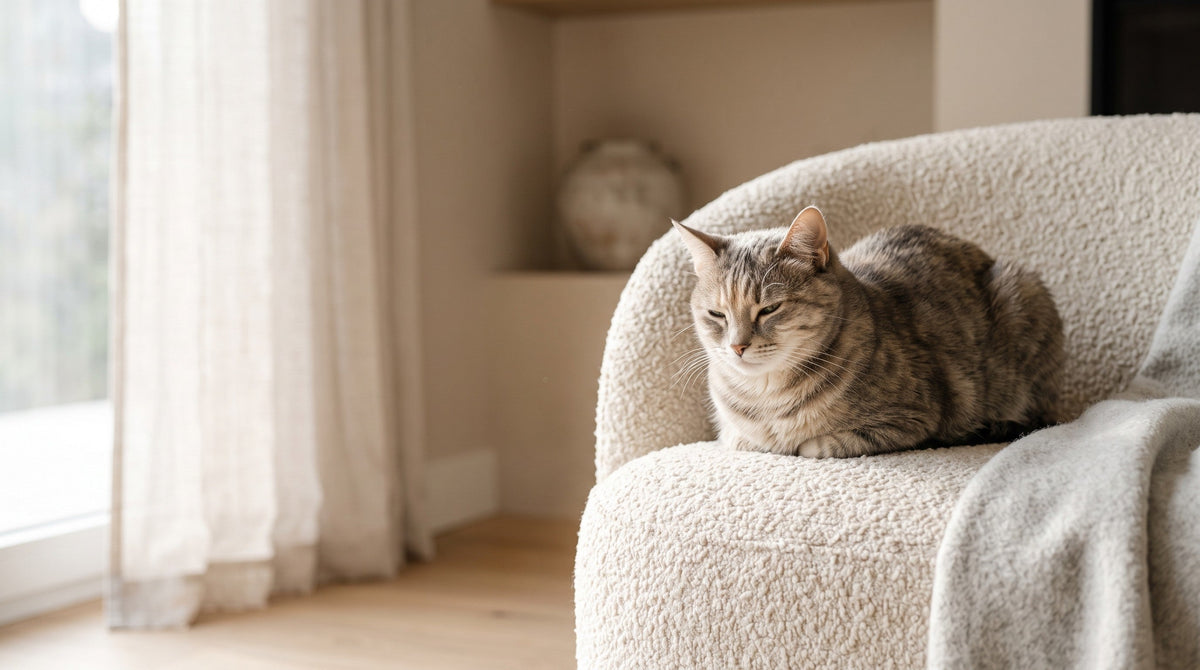
Stressed cats show fear quietly — your cat may hide for hours, refuse food, or over-groom. As a veterinarian, I know how painful it is to see a sweet pet cat retreat into anxiety, and any cat can learn to feel safe. Cats — unlike humans — evolved as predators and prey, so the cat brain is wired for alertness and the fight-or-flight response triggers easily. A loud noise, a stray cat near the window, a change in your routine, or the dreaded carrier can all be perceived as threats. The right calming aid for cats — paired with environmental support — transforms daily life for an anxious pet cat and keeps your kitty calm when overwhelm hits.
When fear and cat anxiety evolve into chronic stress, the toll on a cat's body is real. Chronic stress can lead to behavioral issues like house-soiling, urine spraying, or aggression in your cat, and it can trigger feline idiopathic cystitis. Fortunately, veterinary science has made strides in understanding cat emotions. Today, many cat calming products help keep cats calm in modern homes. From pheromones and spray to calming treats, collars, and prescription support, the right combination reduces cat anxiety and helps your cat feel calm. Knowing how to use these calming aids is key.
Summary
Why your cat experiences anxiety
You may assume your cat should be calm at home, but cats experience anxiety more than we realize. A change in routine — a new baby, a renovation, another pet, or rearranged furniture — can be deeply unsettling for a cat. Cats also feel anxious when the litter box is unsafe, when many cats compete, or when the daily rhythm shifts. General anxiety differs from fear; fear is acute, while cat anxiety is sustained and shows up as hiding, decreased appetite, reduced grooming, or extra scratching. Some cats experience anxiety so subtly that pet owners only notice when behaviors escalate. Many pet parents and other pet owners see anxiety as a personality trait, but it is a treatable signal.
The 3-3-3 rule with cats is helpful for newly adopted cats: expect three days of hiding, three weeks for your kitty to settle in, and three months for your cat to feel fully calm at home. Throughout that adjustment, calming products and a steady routine shorten the path to a calm baseline. Anxiety also has a physical signature — elevated cortisol affects digestion, immunity, and your cat's weight, so addressing your cat's stress early protects long-term health and helps reduce stress later.

The foundation: Calm environments come first
Before reaching for a supplement or medication, look at your cat's environment. In veterinary medicine, we use Multimodal Environmental Modification, or MEMO. MEMO simply means optimizing your cat's home to reduce conflict and increase a sense of control, which raises the threshold for stress. No calming aid can outwork a chaotic home, so an environment-first approach helps you minimize stress without adding anything new.
Cats need their territory to feel safe and abundant. Because cats instinctively seek high vantage points, providing elevated resting places — cat trees, window perches, or cleared shelving — is helpful for a cat to stay calm and feel in control. Add helpful scratching posts in central rooms; scratching posts reduce scratching elsewhere and reduce cat anxiety overall by giving your cat an acceptable outlet. Helpful daily play with wand toys or laser pointers burns anxious energy and helps soothe your cat into a calm rhythm and helps your cat relax. Puzzle feeders that release small portions of cat food during play stimulate the predatory cat brain, turning a stressful moment into a successful "hunt" that ends in calm.
In your multi-cat home, competition fuels anxiety. Provide separated feeding stations, water bowls, scratching posts, and a litter box for each cat. The classic litter box rule is one for each cat plus one extra. With two cats you need three boxes; with four cats, five. By creating an "environment of plenty," you give each cat predictability that calms daily friction between animals.
Pheromones: Scent signals of safety
If the home is calm but your cat is still on edge, pheromones are an excellent next step. Cats navigate their world largely through smell. When your cat feels calm and happy, you will see them rubbing cheeks against your legs or the corners of furniture. During this rubbing, your cat deposits natural pheromones that act like invisible sticky notes, marking the area as familiar and safe.
Scientists have created synthetic pheromones that copy these calming facial chemicals — specifically the F3 fraction. When a cat detects synthetic pheromones through a specialized scent organ in the roof of the mouth, the message travels directly to the brain, reducing vigilance and producing a calming effect. Because pheromones do not require your cat to swallow anything, they are user-friendly. Pheromone diffusers — sometimes called plug ins — disperse pheromones into the rooms your cat uses most and create a calm atmosphere.
A pheromone spray inside the carrier thirty minutes before vet visits takes the edge off the car ride, and a quick pheromone spray on bedding before a thunderstorm helps an anxious cat stay calm. Spray and plug ins work differently: spray gives quick, targeted relief for short triggers, while plug ins broadcast continuous calm signals. For households dealing with urine spraying, pheromone diffusers placed near the affected rooms reduce stress related behaviors within a few weeks. Pheromones also pair well with other options like calming treats or calming collars, because the modes do not interfere.

Nutraceuticals: Nutrition that helps your cat stay calm
If environmental management and pheromones need an extra boost, nutraceuticals are dietary supplements with a calming health benefit through food. Several evidence-based options are formulated specifically to soothe a cat's emotional response to stress without sedating your cat, and they slot easily into a daily routine alongside cat food.
One of the most useful active ingredients is alpha casozepine, a natural peptide derived from a milk protein. Think how relaxed and calm a baby or kitten becomes after nursing; this peptide is believed to mimic that calm physiological state by interacting with the brain's calming pathways. Sprinkle onto cat food daily before known triggers to help your cat with mild to moderate anxiety. Many cat owners notice softer body posture and easier sleep within a couple of weeks of consistent dosing.
Other excellent calming aids include the amino acids l tryptophan and l theanine. L tryptophan is a natural building block for serotonin, the neurotransmitter that supports a calm, balanced mood, and pheromones can complement these calming effects. L theanine, naturally found in green tea, supports calm neurotransmitters and helps reduce fear in your cat. Peer reviewed studies show that supplements with natural ingredients like l theanine produce a calming effect during predictable stressors like vet visits, travel, or boarding. Botanicals such as silver vine, valerian root, or catnip stimulate relaxing behaviors in many cats — a safe, temporary distraction that helps a cat relax. Chamomile may also support GABA pathways, gently lowering arousal in anxious cats.
Calming treats and chews
Cat calming treats are a user-friendly format because most cats already love treats. Treats with natural ingredients — chamomile, l tryptophan, plus milk-derived peptides — can show effects within 20 to 30 minutes when given before a known trigger, helping your cat relax. Chews soften easily for kittens and senior cats and are easy to dose on demand. Because chews taste pleasant, they help you avoid the conflict of giving a stressed cat a regular pill. A well-formulated cat calming treat is often the first nutraceutical I recommend for situational stress.
Cat calming aids in chew form pair well with daily cat food. Sprinkle a powdered cat calming version onto cat food, or offer chews as a small calm ritual before a known stressor. Calming chews are also a reliable way to teach your pet that the carrier predicts calm, good things. Many calming chews are dosed by weight, with options for kittens and adults.
Calming collars, sprays, and pressure wraps
When you need on-the-go support, calming collars are quietly powerful. Collars come in three sizes for kittens and adult cats and release pheromones steadily as your cat moves between rooms. Many cats accept wearing a soft collar without protest, especially when introduced with treats. Collars work well on car rides or in a multi-cat home. Replace collars on the manufacturer's schedule; a stale collar will not deliver the same calming effect. Well-fitted collars sit gently against your cat's body without pinching, and wearing the collar through holidays, fireworks, or guest visits gives your cat a steadier baseline.
A pheromone spray is often used on bedding, carriers, or thresholds before a stressful event. A pheromone spray bottle gives spot relief for short triggers and reinforces the calm message that diffusers broadcast continuously. Many pet parents keep a small bottle of spray near the door for grooming days, vet visits, or guests.
Pressure wraps are another non-pharmaceutical favorite. Inspired by swaddling a baby, a wrap applies gentle, even contact across the cat's body, producing a calm effect for anxious cats. Pressure wraps help during fireworks, thunderstorms, or vet visits. Combined with calm music, wearing a wrap can shift the entire feel of a room from alarming to safe. These tools layer well with calming collars, calming treats, and pheromone diffusers because none rely on the same delivery system.

Prescription medications: When stress overwhelms
Sometimes, despite our best efforts, a cat's fear is too overwhelming. This is true for situational events like thunderstorms, fireworks, or trips to the clinic, which many cats view as terrifying. In severe acute stress — or for cats with debilitating chronic anxiety — your veterinarian may recommend a prescription medication, often layered on top of calming aids you already use to reduce cat anxiety.
The most commonly prescribed medication for situational cat anxiety is gabapentin. Originally a human anti-seizure and nerve-pain medication, veterinary behaviorists found gabapentin reduces excitatory chemicals in the brain, dulling the fear response. Given a couple of hours before a vet visit or car ride, gabapentin can transform a panicking pet into a calm, cooperative patient. Another option is trazodone, which alters serotonin levels to provide mild sedation and calm relief.
Because every cat's metabolism is unique, these medications must be prescribed by your pet's veterinarian. The common side effects are temporary sleepiness or slight unsteadiness (ataxia), which resolve within a few hours. Prescription medications work best when paired with the foundational calming aids — environment, pheromones, and calming treats — rather than used alone.
What is the best calming aid for cats?

Reading stress, and how cats say goodbye
Knowing your cat's body language helps you act earlier. Watch for hours of cat hiding, tucked tail, flat ears, dilated pupils, and reduced cat grooming. Increased scratching can signal anxiety; calming products that gently soothe arousal, like diffusers, reduce scratching and help your cat feel calm. When a beloved cat is preparing to say goodbye at the end of a long life, the cat often seeks a quiet, hidden room, sleeps more, and stops interacting. This is a medical signal, not a calming aid issue; if your cat withdraws this way, contact your veterinarian, because illness and general anxiety can look similar.
A note on your cat's worst enemy

Conclusion and actionable steps
Understanding that your cat's anxiety stems from natural survival instincts is the first step toward calm. Cat calming aids are a toolbox of options that work best layered together. As a calm, attuned pet parent you can take practical steps today.
Evaluate your home: Walk through your space from your cat's point of view. Add a cozy elevated resting spot or extra litter box in a quiet area to lower tension.
Plan ahead to reduce cat anxiety: For a move, a new baby, or vet visits, plug in pheromone diffusers a week ahead and spray a calming spray on the carrier.
Layer the pet calming aids: Combine collars, treats, or a gentle wrap with environmental support for a stronger calm than a single product alone.
Talk to your veterinarian or pet health expert: For dogs, cats, and the patient humans who care for them, persistent fear deserves a closer look. If your cat is hiding, over-grooming, urine spraying, or aggressive, schedule a consultation. Ask whether a nutraceutical with alpha casozepine or l theanine, or a medication like gabapentin, can help your pet kitty rediscover calm.
A calm cat needs layered support — pheromones, calm spaces, and a calm pet parent, consistency, and an owner who reads triggers early. With patience and the right tools, even anxious cats return to feeling safe, curious, calm, and connected.

Dr. Stefan Novevski
Dr. Stefan Novevski is a licensed veterinarian at a small animal clinic specializing in internal medicine, reproduction, dermatology, nutrition, and animal welfare, who continuously updates his expertise through professional development and international clinical experience while prioritizing client education for optimal pet health outcomes.
The information in this article is based on the following scientific publications:
- Elliott, J., & Grauer, G. (Eds.). (2006-2007). BSAVA Manual of Canine and Feline Nephrology and Urology (2nd ed.). BSAVA Publications.
- Villiers, E., & Blackwood, L. (Eds.). (2005). BSAVA Manual of Canine and Feline Clinical Pathology (2nd ed.). BSAVA Publications, Gloucester
- Horwitz, D. F., & Mills, D. S. (Eds.). (2009). BSAVA Manual of Canine and Feline Behavioural Medicine (2nd ed.). BSAVA Publications, Gloucester
- Harvey, A., & Tasker, S. (Eds.). BSAVA Manual of Feline Practice: A Foundation Manual. BSAVA Publications
- Rendle, M., & Hinde-Megarity, J. (Eds.). (2022). BSAVA Manual of Practical Veterinary Welfare (1st ed.). BSAVA Publications.
Looking for a solution? Start here
Stylla Calmness for cats
Supports relaxation and emotional balance with amino acid-based formulation
- Promotes emotional balance and relaxation
- Helps maintain balanced behaviour
- Supports healthy physiological equilibrium
Made in Switzerland with strict quality standards


