

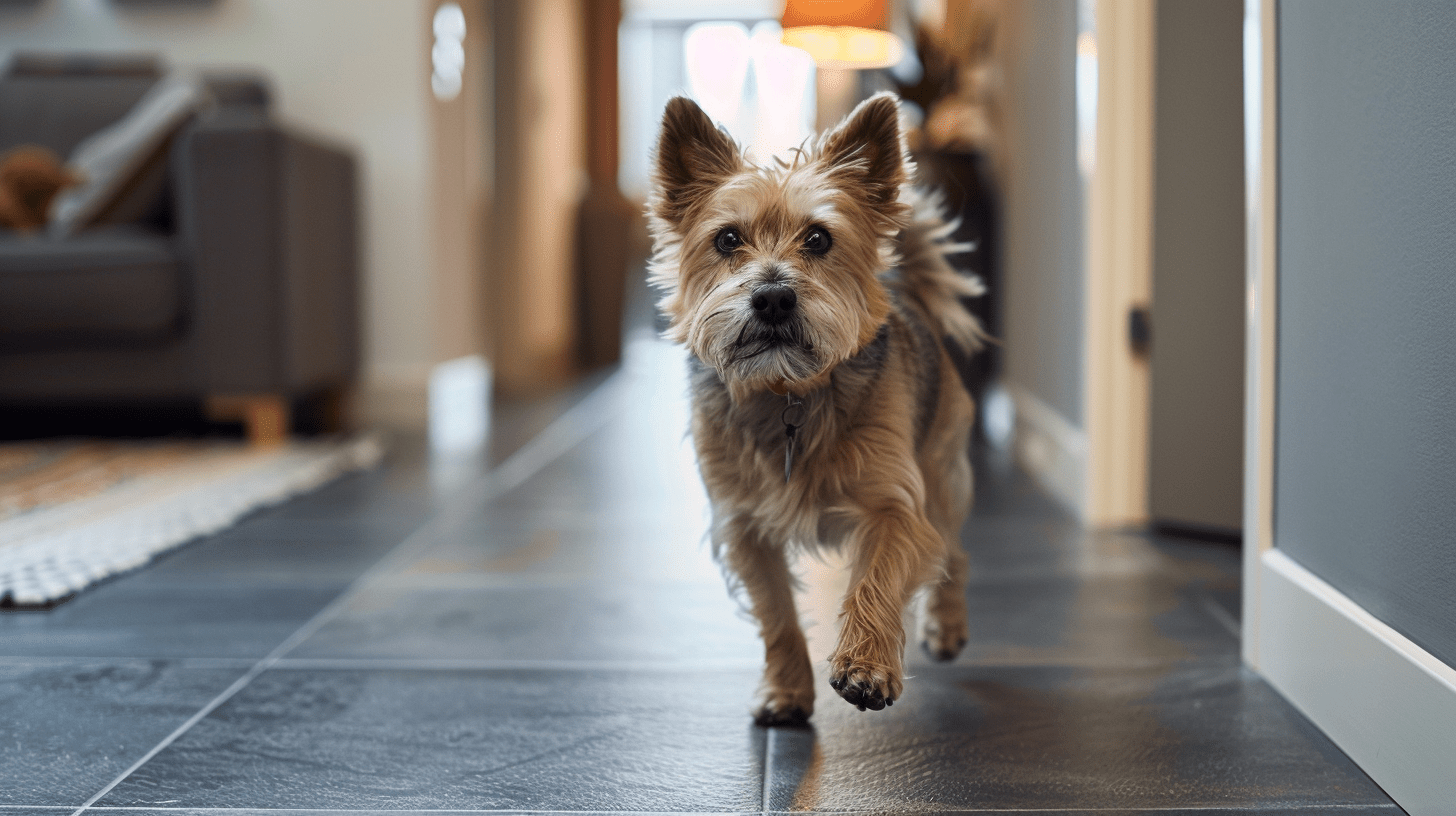
We have all witnessed this familiar scene: your enthusiastic senior dog hears the doorbell and scrambles to greet the visitor, only to spin their paws like a cartoon character and slide helplessly across the shiny hardwood floors. If you watch this happen and feel a knot in your stomach, you are not alone. Dog slipping on floor surfaces is one of the most common concerns I hear from pet parents — and, more importantly, it is one of the most preventable.
As a veterinarian who has spent years working with aging and injured dogs, I want you to understand something important: slipping is not just clumsiness. It is not an inevitable part of getting older that you simply have to accept. Dog slipping is a genuine health and safety issue. The good news? There are real, practical tips and solutions that can transform your home back into a safe haven for your pet — without replacing every floor in the whole house.
Summary
Why hard floors are so dangerous for your senior dog
To understand why your modern home can be hazardous, we need to look at canine anatomy. Dogs evolved to traverse uneven, textured terrain: dirt, grass, forest floors, mud. When they walk outdoors, their toenails act like athletic cleats, digging into the earth to provide traction, stability, and propulsion during dog walks and everyday movement.
Place those same "cleats" on hardwood floors, laminate, or tiled floors, and everything changes. The hard nails slide against the slick surface instead of gripping it. Your dog's feet are then forced to rely entirely on the smooth, hair-covered skin of their paw pads for traction — and for a senior dog, that is rarely enough.
When a dog slips, they instinctively tense their muscles and splay their legs to catch themselves. Over time, this repetitive micro-trauma leads to painful muscle strains and severe ligament injuries. The fear of falling causes your dog to walk with a tense, rigid gait — which paradoxically makes future slips more likely and worsens any existing pain.

Medical culprits: When dog slipping signals a deeper problem
Osteoarthritis: The most common cause of mobility issues
The most common culprit is osteoarthritis (OA). Arthritis is a progressive disease in which the protective cartilage cushioning the ends of the bones wears away, causing chronic inflammation and persistent pain in the joints. When a dog's joints hurt, they instinctively alter how they carry their weight to compensate for that pain. This altered, stiff gait often triggers rapid muscle loss — a condition called sarcopenia. With weaker muscles and painful joints, your older dog simply lacks the physical strength to catch themselves on slippery surfaces. Addressing arthritis is therefore a critical part of any slip-prevention plan.
Neurological deficits and proprioception loss
Sometimes, the trouble originates in the nervous system rather than the bones. Healthy dogs possess a subconscious sense called proprioception — essentially, the body's internal GPS system that tells the brain exactly where the paws are in space. In senior dogs, or in pets with spinal conditions like degenerative myelopathy or degenerative lumbosacral stenosis, this vital communication pathway gradually breaks down. Without normal proprioception, your dog may fail to place their foot flat on the ground, or they may drag their toes instead of lifting them cleanly. This neurological disconnect makes them extraordinarily vulnerable to sliding on slippery floors and even falling on stairs.
The obesity factor
Excess weight creates a dreaded duo with immobility that robs dogs of their dog's quality of life. When an overweight pet begins to slide, their excess body mass generates more momentum, making it far harder for compromised joints and muscles to stop the fall. Beyond that, body fat produces inflammatory hormones called adipokines, which drive chronic systemic inflammation and worsen joint pain throughout the body.
Studies show that a structured weight reduction program significantly increases a dog's ground reactive force, meaning they can bear weight more comfortably and confidently. If your vet has flagged your dog's weight, addressing it is one of the most impactful tips for restoring their mobility.
Paws and claws: The mechanics of grip
The problem with long toenails
Long toenails — sometimes called long nails or overgrown nails — are a primary hazard. If a dog's toenails are too long, they prop the paw pads off the floor, effectively stripping away your dog's natural traction. Imagine trying to walk confidently across ice in high heels — that is exactly what long toenails feel like to your pet.
Trimming the dog's nails every two to four weeks is one of the simplest and most effective steps you can take. However, it is equally important to avoid trimming too short: cutting down to the sensitive blood vessel called the "quick" causes acute discomfort and makes your dog reluctant to bear weight properly. If your dog is fearful of nail trims, your vet or a certified fear-free groomer can help. Some veterinarians will prescribe mild, temporary anti-anxiety medications to make the process genuinely stress-free for everyone.
Excess fur between the pads
Many breeds grow long tufts of fur between their paw pads — and on a smooth floor, this excess fur acts like a pair of fuzzy socks, virtually guaranteeing a wipeout. Long hair growing between the pads should be trimmed flush with the pads at every grooming session. You can do this safely at home using small, rounded-tip scissors or an electric trimmer. You will notice an immediate improvement in grip once this excess fur is removed.

Practical solutions: How to help your dog stop slipping
Tip 1: Strategic use of rugs, runners, and carpet
You do not need to replace your beautiful floors. Instead, create safe, navigable pathways for your pet throughout the house. Lay area rugs, long carpet runners, and non-slip washable mats in high-traffic areas — especially where your dog eats, sleeps, and greets you. Stairs are a high-risk zone for a senior dog; lay carpet or rubber-backed rugs on stairs to prevent falling.
Yoga mats are a surprisingly effective and affordable solution. Yoga mats provide excellent grip on hardwood floors and tiled floors alike, and they are easy to clean, trim to size, and reposition as needed. Many pet parents use yoga mats in the kitchen where their dog eats, in the bedroom where their dog sleeps, and at the base and top of stairs. Yoga mats can also be layered under area rugs to prevent the rug itself from sliding. Look for yoga mats at any pet store or general retailer — they are widely available and inexpensive.
Using yoga mats strategically is one of the top tips recommended by rehabilitation veterinarians. The benefit of yoga mats over traditional carpet runners is their non-porous surface: they do not absorb pet odors and are machine-washable or wipe-clean.
Tip 2: Toe grips — A veterinarian-developed solution
One of the most innovative and well-researched solutions for dog slipping is a product called ToeGrips, developed by veterinarian Dr. Julie Buzby. Toe grips are small, textured rubber rings that slide directly onto the toenails of a dog's feet, providing immediate friction between the nail and the floor. Dr. Julie Buzby designed toe grips specifically for senior dogs and dogs with mobility issues — and they have transformed the daily lives of thousands of pets.
Toe grips are applied directly to the dog's toenails with no adhesive required. They are applied directly over the nail and held in place by the natural taper of the toenail itself. Because they are applied directly to the nails, toe grips work effectively on hardwood floors, tiled floors, laminate, and slippery surfaces of all kinds. Toe grips are available in multiple sizes at your vet's office, through your veterinarian, or at select pet store locations.
Dr. Julie Buzby recommends checking toe grips regularly — they can grow loose as the dog's toenails grow long, and they will need to be replaced periodically. When toe grips are combined with regular nail trimming, the improvement in grip and confidence is often dramatic. Many pet parents report watching their senior dog return to activities they had long abandoned: jumping on the sofa, walking freely through the house, navigating stairs with ease.
Tip 3: Dog socks and booties
Dog socks and dog booties with rubberized non-slip soles offer another layer of protection for dogs struggling on slippery surfaces. Socks are available at virtually every pet store and come in a wide range of colors and styles. Look for socks with grip dots or a rubberized sole — plain fabric socks without grip can actually make slipping worse. Dog boots provide more coverage and are especially useful for a senior dog recovering from surgery or managing severe arthritis.
When introducing socks or boots, take it slowly. Some dogs take a while to adjust to the sensation of wearing something on their feet. Start by letting your pup wear the socks for a few minutes at a time, gradually increasing the duration over several days. Offer treats generously throughout this process to build a positive association. Watch carefully for any signs of skin irritation or rubbing around the toes and ankles.
Tip 4: Paw wax and grip sprays
Tip 5: Ramps and supportive aids for furniture and stairs
A senior dog who is struggling on slippery surfaces is likely also having trouble navigating stairs and jumping onto furniture. Providing low-incline ramps or carpeted steps for the sofa, bed, and car reduces the risk of falling and significantly eases the strain on arthritic joints. Ramps are one of the most impactful solutions for improving your dog's quality of life at home.

Medical management and physical therapy
Environmental modifications work best when paired with proper medical management. Schedule a comprehensive veterinary exam to evaluate your pet for underlying arthritis, neurological deficits, and weight-related mobility issues. Your veterinarian may recommend:
Pain management: non-steroidal anti-inflammatory drugs (NSAIDs), joint supplements, and newer therapies like anti-NGF injections can dramatically improve comfort and gait in dogs with arthritis.
Weight management: a structured weight-loss plan tailored to your dog's life stage can restore significant mobility over the course of several months.
Physical therapy: working with a certified canine rehabilitation practitioner offers incredible benefits. Simple exercises — such as repeatedly moving from a square sitting position to standing — can rebuild wasted thigh muscles. Underwater treadmills, balance boards, and targeted physical therapy sessions restore the muscle strength your dog needs to balance confidently on slippery surfaces.
Physical therapy is especially valuable for older dogs recovering from orthopedic surgery, living with degenerative conditions, or simply lying around more than they used to. If your dog has been lying down more, avoiding stairs, or appearing stiff after lying down for awhile, that is a strong signal to schedule a vet consultation soon.
What about cats and puppies?
While this guide focuses on senior dogs, it is worth noting that dog slipping is not exclusively a senior problem. Puppies — especially large-breed puppies whose paws grow faster than their muscle coordination develops — frequently slip on hardwood floors during their first year. Young puppies benefit from yoga mats and carpet runners just as much as a senior dog does. A puppy who repeatedly slips can develop fear-based movement patterns that persist well into adulthood.
Cats also slip on smooth floors, though they tend to recover more gracefully. A cat with arthritis or a cat who has sustained a limb injury will benefit from many of the same solutions: rugs, yoga mats, cat-specific socks, and paw wax. If you notice your cat struggling on slippery floors, the same veterinary advice applies: check the paws, trim excess fur between the pads, and consult your vet promptly.

A special note on stairs
Stairs deserve special attention for any senior dog, older dog, or dog with mobility issues. Stairs are one of the highest-risk zones for falls and injuries in the home. Dogs who slip on flat floors will inevitably struggle even more on stairs. Carpeting stairs completely is the gold-standard solution. Where full carpeting is not possible, adhesive stair treads or rubber-backed rugs applied to each individual step provide meaningful grip. Baby gates can temporarily block access to stairs while you put longer-term solutions in place.

Giving your senior dog solid ground
Watching your beloved senior dog slip and lose their footing can feel deeply distressing — but you are not powerless. By understanding the biomechanical, orthopedic, and environmental factors at play, you are already equipped to make meaningful changes to their daily life.
Whether it involves laying down yoga mats and rugs on slippery floors, applying toe grips to your dog's toenails, introducing socks or booties, trimming excess fur from the paw pads, or working with your vet to address hidden arthritis and weight gain — every step you take provides your pet with a firmer foundation.
Your senior dog deserves to move through their home with confidence, comfort, and security. With the right combination of tips, solutions, and veterinary guidance, you have everything you need to give them exactly that. For extra reassurance between vet visits, you can also consult with pet health experts.

Dr. Stefan Novevski
Dr. Stefan Novevski is a licensed veterinarian at a small animal clinic specializing in internal medicine, reproduction, dermatology, nutrition, and animal welfare, who continuously updates his expertise through professional development and international clinical experience while prioritizing client education for optimal pet health outcomes.
The information in this article is based on the following scientific publications:
- Elliott, J., & Grauer, G. (Eds.). (2006-2007). BSAVA Manual of Canine and Feline Nephrology and Urology (2nd ed.). BSAVA Publications.
- Villiers, E., & Blackwood, L. (Eds.). (2005). BSAVA Manual of Canine and Feline Clinical Pathology (2nd ed.). BSAVA Publications, Gloucester
- Horwitz, D. F., & Mills, D. S. (Eds.). (2009). BSAVA Manual of Canine and Feline Behavioural Medicine (2nd ed.). BSAVA Publications, Gloucester
- Harvey, A., & Tasker, S. (Eds.). BSAVA Manual of Feline Practice: A Foundation Manual. BSAVA Publications
- Rendle, M., & Hinde-Megarity, J. (Eds.). (2022). BSAVA Manual of Practical Veterinary Welfare (1st ed.). BSAVA Publications.
Looking for a solution? Start here
Stylla Mobility for dogs
Supports mobility and active lifestyle
- Helps maintain healthy joints and mobility
- Supports cartilage and connective tissue function
- Encourages an active lifestyle
Made in Switzerland with strict quality standards


