

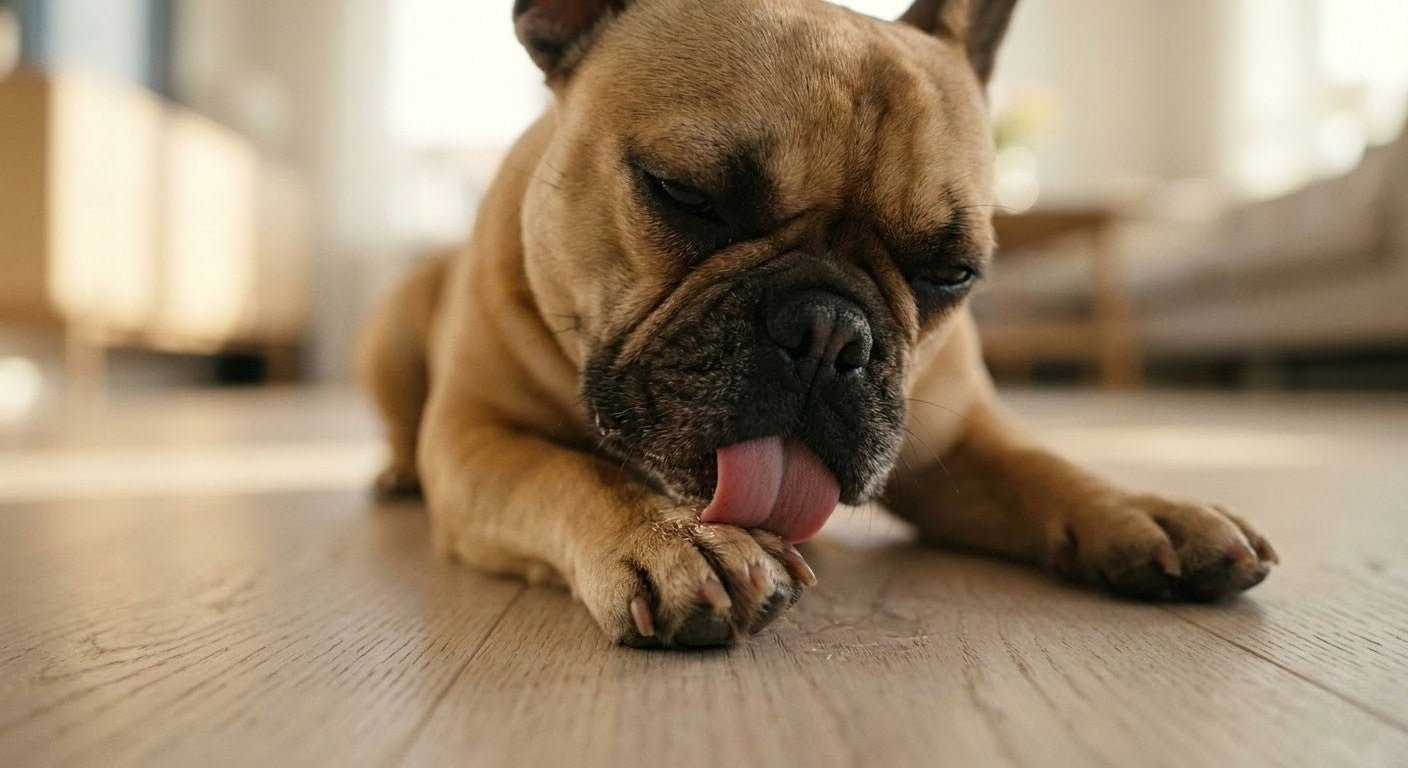
We all love watching our dogs settle in for a cozy evening, perhaps with a gentle sigh and a quiet grooming session. Occasional paw licking is perfectly normal canine behavior—a sign that your pet is simply tending to their own hygiene. But when that occasional paw licking turns into an obsessive, relentless marathon that leaves their paws constantly wet, irritated and stained, it is time to pay close attention.
As a veterinarian, dog licking paws excessively is one of the most common concerns I hear from dedicated pet owners. This behavior is a symptom—a flashing check-engine light warning us that something is genuinely bothering your furry best friend. It could be intense itching, hidden pain, or even an anxious mind. Let us explore the most common causes behind this behavior, decode what your pet is trying to tell you, and discuss how we can work together to help them find lasting relief.
Summary
Is paw licking normal in dogs?
Paw licking is normal when it is brief and infrequent. Dogs lick their paws as part of everyday grooming, much like cats do. The concern arises when a dog is licking obsessively—chewing, slurping, or gnawing at the paws for extended periods throughout the day. If you notice redness, hair loss, a bad smell, or skin irritation developing between the toes, that occasional paw licking has crossed into a medical concern that warrants your veterinarian's attention.
The most common causes of dog licking paws
Understanding the underlying problem is always the first step toward effective treatment. The most common causes of dogs licking their paws fall into four broad categories: allergies, pain or injuries, behavioral issues rooted in stress and anxiety, and secondary infections that develop as a direct result of the licking itself.

The itch you can't scratch: Allergic reactions
Flea bite hypersensitivity
Environmental allergies and atopic dermatitis
Environmental allergies, formally known as atopic dermatitis, occur when your dog's immune system overreacts to everyday airborne particles like pollen, dust mites, or mold. Because dogs step directly onto these environmental allergens every time they go outside, their paws often bear the full brunt of the irritation. Seasonal allergies are especially common, with many dogs showing increased itchy skin and paw licking during spring and fall.
Dogs with atopic dermatitis frequently also show signs in their ears and along their legs, making atopic dermatitis one of the most recognizable patterns a veterinarian evaluates during a dermatological exam.
Food allergies and food sensitivities
Food allergies—formally called Cutaneous Adverse Food Reactions (CAFR)—develop when your dog's immune system mounts an abnormal defense against a specific ingredient in their diet. The most common triggers are protein sources such as chicken or beef, though food sensitivities to grains or dairy are also documented in animals. It might seem surprising that a food issue causes itchy paws, but systemic inflammation from food allergies very frequently settles in the dog's skin of the extremities and the ears. Table scraps and frequent diet changes can complicate the diagnostic picture significantly.
An elimination diet—the gold standard for diagnosing food allergies—involves feeding a strict novel or hydrolyzed protein diet for eight to twelve weeks in order to identify dietary triggers. This process requires real discipline, which means no table scraps, no flavored medications, and no uncontrolled treats during the trial period.

Ouch! Pain, injuries, and hidden discomfort
If your dog is not itchy, they may well be hurting. Dogs are notoriously stoic—a survival trait inherited from their wild ancestors. When a dog experiences localized pain, their instinct is to lick the affected area to soothe the ache, the dog equivalent of how you instinctively rub your elbow after bumping it on a door frame.
If your dog is licking his paws and focusing exclusively on one specific paw, pain is a highly likely culprit that requires a thorough veterinary examination. Injuries such as a torn nail, a thorn lodged in the pad, a cut between the toes, or a burn from hot pavement can all cause a dog to lick their paws with urgency. However, pain can also stem from internal, less visible sources. Osteoarthritis in the delicate joints of the toes or wrists can prompt relentless licking, as can neuropathy—a tingling, burning nerve pain that radiates down the legs. Learning to manage pain and support joint comfort and mobility in these cases often requires imaging, joint assessments, and prescription medications carefully tailored to the individual dog.
Stress, anxiety, and compulsive behavior
Sometimes the root of the paw licking problem is not in the paw itself, but in the brain. The physical act of licking releases endorphins—your dog's natural, built-in soothing chemicals. For a dog experiencing fear, anxiety, or stress, this repetitive motion becomes a comforting coping mechanism, not unlike a person nervously biting their fingernails.
When licking becomes compulsive
Over time, what begins as a response to stress or boredom can evolve into a deeply ingrained compulsive behavior. Certain breeds and highly anxious individuals are especially prone to this cycle. In veterinary behavioral medicine, we address the underlying psychological state through environmental enrichment, anxiety-reducing techniques, and support for relaxation and emotional balance—when necessary—specific anti-obsessional medications and anxiolytics to help dogs break the mental loop that is driving the behavior issues.

The snowball effect: Hot spots, skin infections, and lick granulomas
Hot spots and secondary infections
This environment rapidly leads to secondary infections that make the paw even more painful and itchy, creating a vicious cycle of self-trauma that is difficult to break without intervention. When this happens acutely, it triggers pyotraumatic dermatitis, more commonly known to pet owners as hot spots. These are fast-spreading areas of self-induced inflammation and infection that require prompt medical attention.
Hot spots are treated by clipping the surrounding fur, antiseptic cleaning, and targeted medications including topical or systemic antibiotics and anti-inflammatory drugs. Left untreated, hot spots expand quickly and can involve alarmingly large areas of skin.
Yeast infections between the toes
Acral lick dermatitis and lick granuloma
If licking his paws continues long-term without intervention, it can lead to acral lick dermatitis—also called a lick granuloma. This is a firm, raised, ulcerated lesion that develops on the lower front legs or paws. Lick granuloma lesions are characterized by significant erythema (redness), hair loss, and alopecia, and they are notoriously stubborn to heal. Treating a lick granuloma requires a multi-pronged approach that addresses both the physical lesion and the long term effects of whatever initial trigger—whether itching, pain, or anxiety—first set the licking in motion.
When to see the vet and what to expect
When you notice excessive paw licking, the most important step you can take is scheduling a visit to your veterinary clinic promptly. Because the causes are so varied, your vet will need to conduct thorough detective work. Expect a full physical and dermatological exam, during which your vet will feel the joints for arthritis and check carefully between the toes for foreign objects and other signs of injury or infection.
Cytology—pressing a piece of tape or a glass slide to the skin and examining it under a microscope—is a key diagnostic tool for identifying yeast infections and bacterial skin infections. If food allergies are suspected, your vet will guide you step by step through an elimination diet trial. For environmental allergies or severe inflammation, your vet can prescribe highly effective anti-inflammatory and anti-pruritic medications to give your dog immediate relief from itchy paws. Omega-3 essential fatty acids are often recommended as nutritional support to help strengthen the dog's skin barrier and reduce inflammation over time.

Actionable tips for pet owners
While you await your veterinary appointment, there are several steps you can take to keep your pet more comfortable.
Use a physical barrier: a physical barrier such as an Elizabethan collar is often necessary to stop self-trauma and allow damaged skin to begin healing. Protective booties can also be used, provided they are breathable and changed regularly to avoid trapping moisture against the affected area.
Redirect and distract: when you catch your dog licking, do not punish them—this only increases anxiety and makes behavior issues worse. Instead, interrupt the behavior gently and redirect their attention to a puzzle toy or a short, positive training session.
Wipe paws after walks: if you suspect environmental allergies or seasonal allergies, use a damp washcloth or a pet-safe hypoallergenic wipe to clean your dog's paws after every walk. This simple step physically removes pollen and allergens before they have the chance to trigger skin irritation.
Avoid home remedies without veterinary guidance: many home remedies circulating online—such as apple cider vinegar soaks or undiluted essential oils—can worsen skin infections or cause additional irritation to already sensitive tissue. Always consult your vet before applying any topical treatment to an inflamed paw.

Protecting your dog's quality of life
Dog licking paws relentlessly is never simply a habit your pet will outgrow on their own. The long term effects of untreated paw licking—from scarring and permanent hair loss to chronic skin infections and lick granuloma formation—can significantly diminish your dog's quality of life and daily comfort. By recognizing the signs early and partnering closely with your veterinarian, you give your dog the very best chance at lasting relief, healthy paws, and a happy, active life ahead. If your dog's paw licking persists or worsens, do not wait—consult with pet health experts who can identify the root cause and build a tailored treatment plan for your pet's lasting comfort.

Dr. Ingrid De Wet
Dr. De Wet brings 15 years of small animal expertise to personalized veterinary care through in-clinic work and emergency teleconsultations, contributing to pet health education while drawing on personal experience as a pet owner to understand the emotional and practical aspects of pet healthcare.
The information in this article is based on the following scientific publications:
- Elliott, J., & Grauer, G. (Eds.). (2006-2007). BSAVA Manual of Canine and Feline Nephrology and Urology (2nd ed.). BSAVA Publications.
- Villiers, E., & Blackwood, L. (Eds.). (2005). BSAVA Manual of Canine and Feline Clinical Pathology (2nd ed.). BSAVA Publications, Gloucester
- Horwitz, D. F., & Mills, D. S. (Eds.). (2009). BSAVA Manual of Canine and Feline Behavioural Medicine (2nd ed.). BSAVA Publications, Gloucester
- Harvey, A., & Tasker, S. (Eds.). BSAVA Manual of Feline Practice: A Foundation Manual. BSAVA Publications
- Rendle, M., & Hinde-Megarity, J. (Eds.). (2022). BSAVA Manual of Practical Veterinary Welfare (1st ed.). BSAVA Publications.
Looking for a solution? Start here
Stylla Calmness for dogs
Supports relaxation and emotional balance with amino acid-based formulation
- Promotes emotional balance and relaxation
- Helps maintain balanced behaviour
- Supports healthy physiological equilibrium
Made in Switzerland with strict quality standards


