

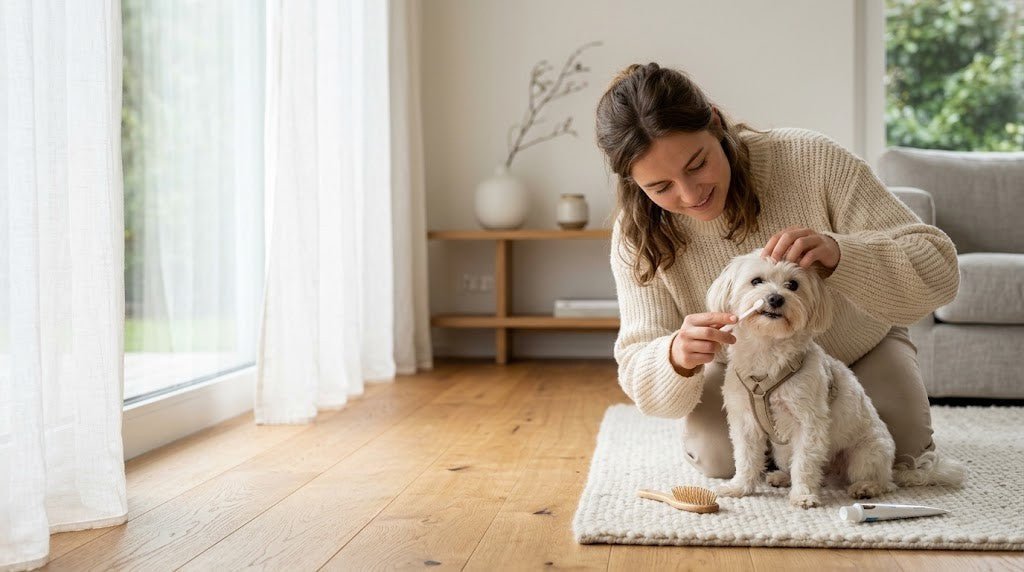
You love your dog's enthusiastic kisses, but recoil from their foul breath! That is one of the first signs of a hidden problem most pet owners miss: dental disease. Brushing your dog's teeth is the most powerful step a pet parent can take to prevent painful infections that damage the mouth and overall health.
By two years old, 80% of dogs have already developed dental disease. Consistent home dental care prevents most of it. This in-depth guide gives pet parents the tools and technique to turn teeth cleaning into a calm daily habit.
Summary
Why dental care for the dog's teeth matters
Every meal, bacteria mix with food and saliva to form plaque on the dog's teeth. Without regular tooth brushing, the film hardens into tartar; without daily tooth brushing, that tartar accumulates as cement-like brown tartar buildup along the gum line. This vicious cycle of plaque and tartar slips below the gums and triggers gum disease.
Once gum disease takes hold, the immune response destroys tissues holding the teeth, called the periodontal tissues. Untreated periodontal disease leads to loose teeth, fractured teeth, and tooth loss, plus other infections. In severe cases, bacteria from the dog's mouth travel through the bloodstream and threaten the heart, kidneys, and liver.
Many dog owners assume that if the dog still eats, nothing is wrong. But dogs hide pain instinctively. Watch for signs of dental disease: foul dog breath, red gums, fractured teeth, dropped food, or pawing at the mouth. Affected teeth need a vet exam.

The tools that keep your dog's teeth clean
Effective dog dental care does not need fancy gear.
The brush. A soft-bristled dog toothbrush works for most dogs. For smaller dogs, a finger brush slides easily inside the mouth. The brush should massage healthy gum tissue without irritation.
The toothpaste. Always use dog toothpaste, never human toothpaste. Human toothpaste contains fluoride and foaming agents that are toxic to dogs because they cannot spit. Baking soda is no safer because of its salt content. Veterinary dog toothpaste is safe to swallow and comes in flavors like poultry or peanut butter that double as treats.
Backup tools. Dental wipes are useful when a brush feels like too much. Dental wipes glide along outer surfaces and wipe soft buildup away, although they will not reach the back molars as well as a brush.

A calm daily routine to clean teeth at home
Step 1: Acclimate your dog to face handling
Step 2: Introduce the dog toothpaste
Step 3: From a finger brush to a real brush
Step 4: Focus where buildup forms
Brush the outer surfaces, especially the canines, then finish inside, where less plaque collects. End every session with a treat.
If your dog tolerates more, add a short evening session and use dental wipes between brushings. Four good rounds of teeth cleaning a week is a good way to keep your dog's teeth clean.

Beyond brushing: Dental chews, water additives, and chew toys
Brushing your dog's teeth is the gold standard, but other dog dental care products work alongside it.
Dental chews. Choose dog chews with the Veterinary Oral Health Council seal. The VOHC tests products and only awards the seal to dental chews proven to reduce plaque. Chewing dental chews scrapes against the teeth, although chewing tends to clean only the chewing surfaces and may miss the front teeth. Steady chewing satisfies the natural urge to gnaw, and chewing dental chews keeps your dog's teeth clean between brushings.
Water additives. A dental water additive is a colorless liquid you stir into the bowl your dog uses to drink water. Water additives help control bacteria in the mouth between brushings.
Chew toys. Durable rubber chew toys with grooves let dogs massage gums and remove plaque through chewing. Avoid hard nylon toys, antlers, hooves, and meaty bones; hard bones crack teeth and cause painful infections, and raw bones carry risk. Bones made for dental chewing are safer than weight-bearing bones. Soft chew toys keep the dog's teeth healthy and dog breath fresher; pair toys with daily brush sessions and chewing for best results.
Diet. Some dry dog food kibbles are designed to scrub teeth as your dog chews. Wet food is fine nutritionally, but wet food sticks to teeth and accelerates buildup if you skip brushing your dog's teeth.
Is it too late to clean a dog's teeth if your dog already has bad teeth and visible deposits? Cleaning your dog's teeth at home will not remove tartar that has already mineralized, but cleaning your dog's teeth daily still slows further damage. Pair it with a vet exam to evaluate treatment options.

When to see your vet for professional teeth cleaning
Even with perfect oral hygiene at home, every dog needs help from the animal hospital. The vet at the animal hospital performs an oral exam, takes x-rays to check below the gum line, and scales away calculus no toothbrush can dislodge. Most dogs benefit from professional dental cleanings every one to three years.
Schedule a vet visit promptly if your dog shows advanced gum disease, loose teeth, or affected teeth that hurt during chewing. Early treatment helps your dog stay healthy.
How can you clean your dog's teeth without going to the vet? Daily prevention is your job; only the vet can scrape calculus and treat advanced dental problems under anesthesia. Pairing daily teeth cleaning at home with periodic teeth cleaning at the clinic is a good way to keep dental disease at bay.

Building the habit that protects your best friend
A few minutes with a brush and a tasty dog toothpaste prevents tooth loss, supports the dog's dental hygiene, keeps fresh breath flowing, and shields internal health.
Cleaning your dog's teeth daily, gentle chewing of dental chews, dental wipes between brushings, and a vet ore pet health expert you trust — that is how a pet parent really protects oral health. With patience, you will keep your dog's teeth clean, keep your dog's teeth healthy, and keep your pet smiling.

Dr. Ingrid De Wet
Dr. De Wet brings 15 years of small animal expertise to personalized veterinary care through in-clinic work and emergency teleconsultations, contributing to pet health education while drawing on personal experience as a pet owner to understand the emotional and practical aspects of pet healthcare.
The information in this article is based on the following scientific publications:
- Elliott, J., & Grauer, G. (Eds.). (2006-2007). BSAVA Manual of Canine and Feline Nephrology and Urology (2nd ed.). BSAVA Publications.
- Villiers, E., & Blackwood, L. (Eds.). (2005). BSAVA Manual of Canine and Feline Clinical Pathology (2nd ed.). BSAVA Publications, Gloucester
- Horwitz, D. F., & Mills, D. S. (Eds.). (2009). BSAVA Manual of Canine and Feline Behavioural Medicine (2nd ed.). BSAVA Publications, Gloucester
- Harvey, A., & Tasker, S. (Eds.). BSAVA Manual of Feline Practice: A Foundation Manual. BSAVA Publications
- Rendle, M., & Hinde-Megarity, J. (Eds.). (2022). BSAVA Manual of Practical Veterinary Welfare (1st ed.). BSAVA Publications.
Looking for a solution? Start here
Stylla Mobility for dogs
Supports mobility and active lifestyle
- Helps maintain healthy joints and mobility
- Supports cartilage and connective tissue function
- Encourages an active lifestyle
Made in Switzerland with strict quality standards


