

Watching dogs pace through a
thunderstorm or tremble at vet visits, you know how heavy the feeling gets. As pet parents we soothe our dogs the moment we see distress in our dogs. The good news is that veterinary science offers many evidence-based ways to treat anxiety in dogs without leaping to prescription medications. Natural calming for dogs is not folk magic; it is a set of layered tools working with your dog's body, daily routine, and nervous system to keep dogs calm and reduce anxiety.
This guide covers environmental changes, calming treats, behavioral supplements, and calming oil — the toolkit a vet builds for stress and anxiety in dogs. We also answer the four questions pet owners ask most often when a dog feels anxious.
Summary
Recognizing pet anxiety in dogs early
Pet anxiety in dogs rarely arrives with a roar, and a calm pet starts with a calm owner. Dogs feeling anxious give subtle signals first — excessive panting, pacing, lip-licking, trembling, or hiding. Watch your dog over a normal week, then compare their behavior during fireworks, vet visits, or when you leave the house. Anxious dogs often hide their anxiety in everyday life. Catching pet anxiety early lets you treat the symptoms before they become destructive behavior.
Some forms of pet anxiety are situational — fireworks, separation anxiety, travel, grooming. Others are chronic and need a long-term plan. Either way, a calmer dog starts with a calmer environment, and a calm pet keeps the whole household calmer.
What is the 3-3-3 rule for dog anxiety?
The 3-3-3 rule is a simple framework rescue professionals use when a new dog arrives at their home for the first time: it takes roughly three days to start to relax, three weeks to learn the routine, and three months to truly settle. The 3-3-3 rule is a reminder that for an anxious dog, time, predictability, and patience are themselves powerful calming tools. A consistent daily schedule for feeding, walks, and rest gives a dog calm benefits no calming chews can replace. Anxiety in dogs improves with a calmer routine more reliably than using any single product. The 3-3-3 framework treats anxiety with time, not pills, and keeps anxiety lower for anxious dogs.

Build a calm den: Environment first
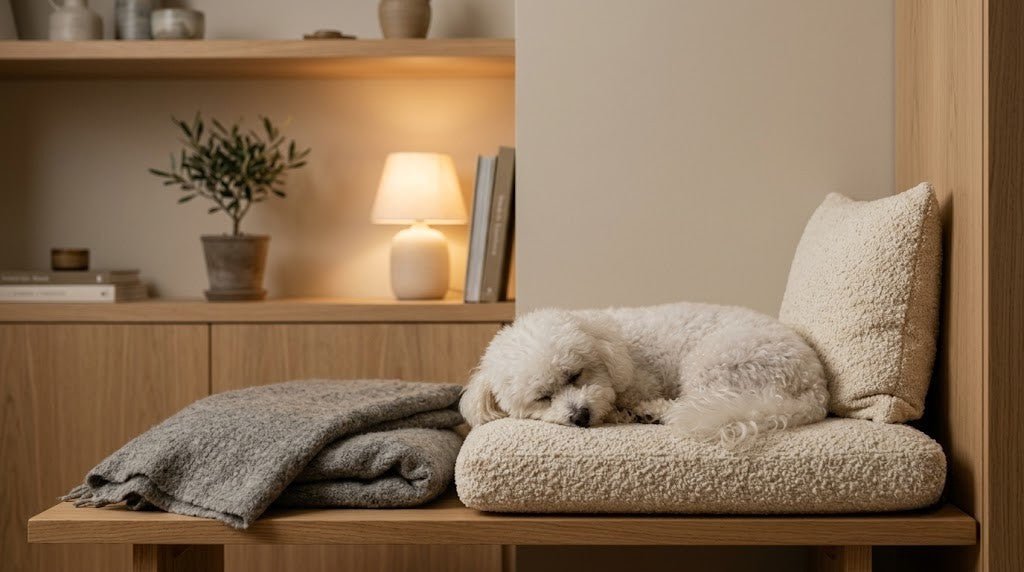
Before any treat or supplement, build a quiet space. A safe haven for an anxious dog can be a crate, a spare room, or a pen with soft bedding, muted lighting, and few visual triggers. A consistent den lets a dog handle stress on its own terms and helps many dogs feel calmer in the background.
Inside the den, engage the senses to calm your dog and other dogs in the home further:
Music therapy. Studies show classical music lowers cortisol levels in stressed dogs and helps a dog handle thunderstorms, fireworks, and other triggers. Classical playlists are one of the easiest, most evidence-supported ways to soothe a dog at home and help your dog relax before bed.
Calming pheromones. Calming pheromones are synthetic versions of the comforting scent a mother dog releases for her pups, and they come in various forms. Plug-in diffusers, collars, and sprays signal safety to dogs and help calm dogs across many stressful situations.
Touch and pressure. Pressure wraps apply gentle, constant pressure that mimics the feeling of being held. Many dogs cope better during fireworks when wearing a wrap. Gentle massage releases endorphins, helps a dog relax, and supports calm behavior.

Calming treats and behavioral supplements
Calming treats are the most popular layer for keeping dogs calm and supporting calmness in anxious dogs. A good calming treat tastes like a normal treat, hides the active ingredients inside, and works through evidence-based natural supplements rather than scheduled sedation drugs. Many calming treats combine valerian root, chamomile, melatonin, and amino acids in a flavored chew dogs eat happily; dogs of all breeds tolerate them well.
Behavioral supplements go deeper than calming treats and are designed to help calm dogs over time. They typically contain a calming complex of alpha-casozepine (a milk-derived peptide), L-theanine and L-tryptophan (amino acids that help the brain make serotonin), valerian root, and chamomile. Together these amino acid blends and natural supplements treat the underlying stress and reduce anxiety without heavy sedation, and the calming effects from a daily behavioral supplement build over a few weeks. A daily routine is especially beneficial for a young pup learning to settle, and the same supplements can help an older pup who has grown more anxious with age.
When the trigger is situational — a thunderstorm, vet visits, a long car ride — a calming chew or calming oil 30 to 90 minutes ahead of the stressful stimulus can act faster for most dogs than a daily supplement. The dog calm window typically lasts several hours.
A few facts worth knowing about calming treats and supplements:
The amino acid L-tryptophan is the same compound that makes humans feel sleepy after eating turkey , and it is a beneficial part of a daily calming complex for dogs.
Chews with chamomile have a long track record in traditional formulas for soothing the nervous system in cats and dogs alike.
Some calming treats also include B vitamins; supplements blending vitamins with amino acids can support steadier mood across the week.
The supplement blend with alpha-casozepine has been shown to treat stress and ease anxiety around handling.
What human medicine can I give my dog to calm down naturally?

Calming oil: A flexible add-on
Calming oil has earned a spot in many calming plans for dogs. A quality calming oil contains a blend of mood-supporting amino acids, herbal extracts, and sometimes hemp-derived compounds. The benefit of an oil over a treat is precise weight-based dosing — you measure by drops and gradually increase to the correct dosage that will calm your dog without sedation.
A calming oil works well as a layered tool. Many pet parents pair a calming oil with calming treats for situational stress, drizzle a calming oil over food to help picky eaters relax, or use a calming oil before grooming so the dog stays calm during handling. Calming oil can be especially helpful for dogs with sensitive stomachs that struggle with chews. The window typically begins within 30 to 90 minutes and lasts several hours, supporting calm during travel and other stressful situations.
CBD is a hemp-derived compound found in some calming oil products. CBD interacts with the endocannabinoid system, which regulates mood, pain, and the gut brain axis. The recommended starting dosage of CBD oil for dogs is usually between 0.2 and 0.8 mg per kg of your dog's weight daily. Talk with a veterinary behaviorist or your regular veterinarian before adding a CBD calming oil, especially if your dog is on other medications.

Mental stimulation, exercise, and the nervous system
Brain games are an underused tool to calm dogs. When dogs are solving a puzzle, the brain has no bandwidth for anxiety. Food-dispensing puzzle toys and licking mats lower arousal and ease stress and anxiety in most dogs. Sniff walks — slow walks where your dog leads with their nose — burn excess energy, prevent boredom, and help calm dogs that struggle to relax at home.
Daily exercise plays a similar role. A tired dog is usually a calmer dog, but only when activity matches the dog's age, weight, and breed. Build daily exercise into the routine and pair it with brain games so dogs get both kinds of release. The right balance can reduce stress and anxiety across the day.
Touch matters too. A gentle massage with the flat of your hand can calm a dog quickly; rapid patting can excite instead. Watch your dog's behavior; if they lean away, give space. Grooming and brushing also release endorphins that promote relaxation in your furry friend and help calm dogs during routine handling.
Herbal remedies for dogs
Herbs have a long history with dogs and humans alike. Several herbs appear in many calming treats and natural supplements. Valerian root raises GABA in the brain, the same calming pathway certain medications target, and works to treat mild anxiety. Chamomile lowers cortisol levels and acts as a mild relaxant. Passionflower can promote relaxation. Melatonin can support sleep and ease pet anxiety in older dogs.
Essential oils require more caution. Many essential oils that are harmless to humans are toxic to dogs and cats; only diffuse what a veterinarian has approved. Lavender used as a diluted scent has been noted to help calm dogs. A small "scent garden" with dog-safe herbs invites natural sniffing — a self-guided form of stimulation that can promote relaxation without any product on the shelf.

Building a layered plan: What do vets recommend for calming dogs?
What can I give my dog to help it calm down? What do vets recommend for calming dogs?
A typical evidence-based plan looks like this:
Environment. A den, a predictable routine, music therapy, and calming pheromones to reduce stress in the background and keep your dog calm hour by hour.
Daily natural supplements. A behavioral supplement or calming complex with alpha-casozepine, L-theanine, and L-tryptophan, sometimes with valerian root.
Situational calming treats or calming oil. A calming chew or a calming oil 30 to 90 minutes before a known trigger such as the groomer to keep your dog calm during the event.
Brain games and exercise. Daily puzzle toys, licking mats, and sniff walks to keep brain activity engaged and treat boredom in dogs.
Veterinary care. A check-in with your veterinarian for severe destructive behavior, with referral to a veterinary behaviorist if needed. In severe cases the veterinarian may discuss prescription medications alongside the natural plan.
The gut brain axis matters too. Diets supporting digestive health, especially for dogs with sensitive stomachs, can support calmer behavior overall. Like cats and humans, dogs feel less anxiety when sleep, food, exercise, and connection are all balanced. Cats also benefit from many of these calming tools, and the science of anxiety in cats informs the canine side. A dog whose physical needs are met has the bandwidth to actually calm itself, which keeps the dog calm naturally.

Bringing it all together for a calmer life
Dealing with an anxious pup feels daunting, but the toolkit is wide. By combining a soothing environment, calming treats, behavioral supplements, brain games, and patience, you can dramatically improve your dog's life. Most settle into a routine that keeps stress and anxiety low across the year — an amazing product or two for hard days, plus daily care and a calmer pet at home.Key takeaways:
Establish a safe haven with soft bedding and minimal triggers; the den is where the calm begins.
Engage the senses with calm music and scent-based pheromone tools to soothe dogs in the background.
Layer behavioral supplements thoughtfully — alpha-casozepine, L-theanine, valerian root, chamomile — and reach for calming treats or calming oil during known triggers.
Move and think daily through physical activity and brain games to keep the body and brain balanced for dogs.
-
Partner with a veterinarian For severe or persistent anxiety, it's worth partnering with your veterinarian — and if you'd like tailored guidance, you can speak to a pet health expert about the right calming plan for your dog.
These strategies treat your dog to the gift of feeling safe — the most powerful calming complex of all.

Dr. Ingrid De Wet
Dr. De Wet brings 15 years of small animal expertise to personalized veterinary care through in-clinic work and emergency teleconsultations, contributing to pet health education while drawing on personal experience as a pet owner to understand the emotional and practical aspects of pet healthcare.
The information in this article is based on the following scientific publications:
- Elliott, J., & Grauer, G. (Eds.). (2006-2007). BSAVA Manual of Canine and Feline Nephrology and Urology (2nd ed.). BSAVA Publications.
- Villiers, E., & Blackwood, L. (Eds.). (2005). BSAVA Manual of Canine and Feline Clinical Pathology (2nd ed.). BSAVA Publications, Gloucester
- Horwitz, D. F., & Mills, D. S. (Eds.). (2009). BSAVA Manual of Canine and Feline Behavioural Medicine (2nd ed.). BSAVA Publications, Gloucester
- Harvey, A., & Tasker, S. (Eds.). BSAVA Manual of Feline Practice: A Foundation Manual. BSAVA Publications
- Rendle, M., & Hinde-Megarity, J. (Eds.). (2022). BSAVA Manual of Practical Veterinary Welfare (1st ed.). BSAVA Publications.
Looking for a solution? Start here
Stylla Calmness for dogs
Supports relaxation and emotional balance with amino acid-based formulation
- Promotes emotional balance and relaxation
- Helps maintain balanced behaviour
- Supports healthy physiological equilibrium
Made in Switzerland with strict quality standards


