

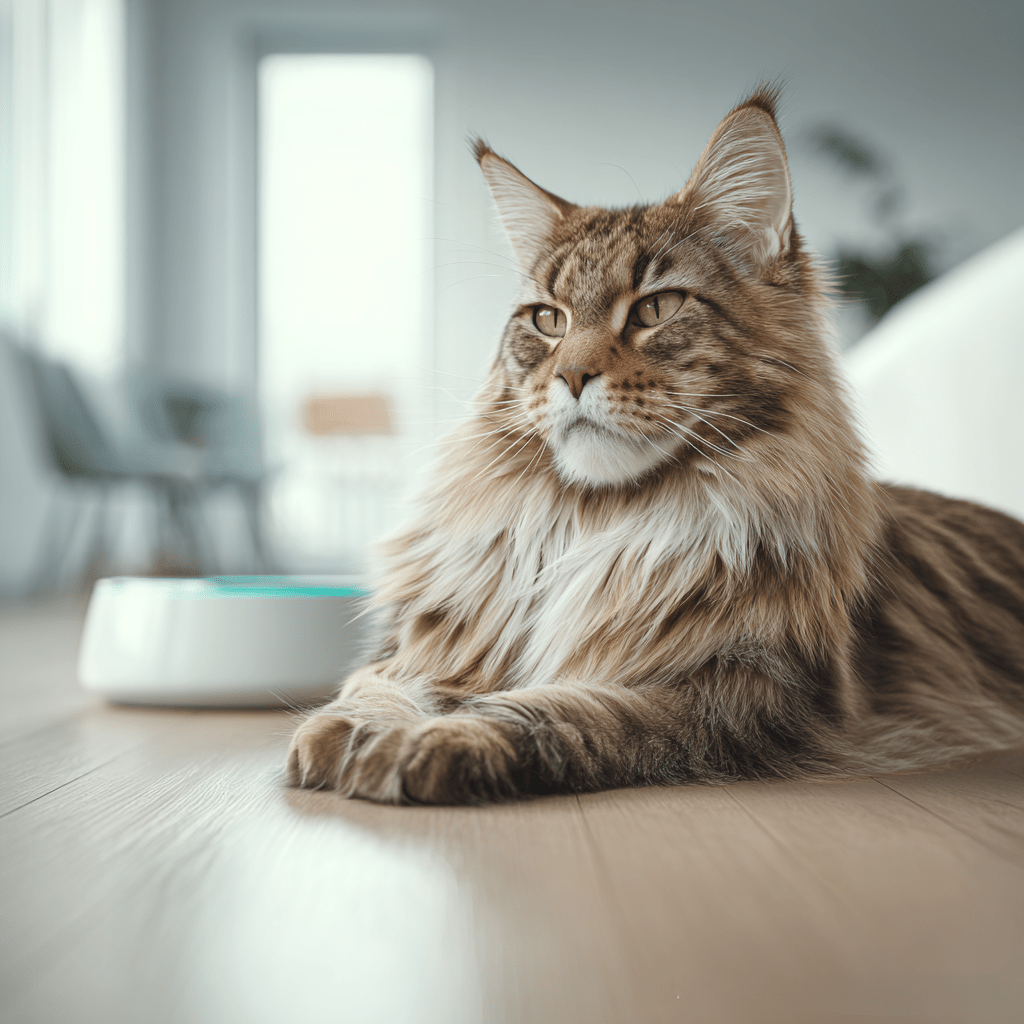
There is something undeniably captivating about the sheer maine coon size. Whether it is their tufted ears, their long bushy tail, or simply their impressive presence as one of the largest domesticated cats, Maine Coon cats command attention wherever they go. As a veterinarian, I often see you walk through my door beaming with pride as you place your maine coon kitten on the exam table, eagerly anticipating the day your little ball of fluff transforms into one of the gentle giants of the cat world. We know that these cats are unique—not just in their dog like personalities and chirping vocalizations, but in their remarkable physical stature. Your Maine Coon does not just grow; it flourishes over an extended period, often not reaching full adult maine coon size until four or five years of age.
Understanding how big Maine Coon cats actually get, what influences their growth, and how their size compares to other cats is essential knowledge if you are considering this remarkable cat breed. The maine coon size is not merely about aesthetics—it impacts everything from their grooming needs and health problems to the space they will require in your home. Let me share what decades of veterinary experience have taught me about these magnificent felines and their impressive proportions.
Summary
How big do Maine Coons usually get?
The average weight of a Maine Coon varies significantly between males and females. Your male Maine Coon cat will typically weigh between 13 to 18 pounds, though some exceptionally big Maine Coon cats can reach 20 to 25 pounds. Female Maine Coon cats are notably smaller, with females weighing between 8 to 12 pounds on average. However, these ranges represent healthy weight parameters—not every cat reaching the upper limits is necessarily in ideal body condition.
When we discuss maine coon cat size, weight tells only part of the story. These cats are long and muscular, with males often measuring 40 inches from nose to tail tip. Their substantial bone structure, large paws, and heavily furred ears contribute to their commanding appearance. A male Maine Coon standing or sitting can appear as tall as a small dog, which is why many people mistake them for other animals entirely when they first encounter the breed.
The tail alone deserves special mention when discussing cat size. Your Maine Coon's tail can measure 12 to 18 inches in length, providing balance and serving as extra protection against the harsh winter climates of their ancestral home in New England. This long, plumed tail—combined with their dense water resistant fur—gives them a silhouette unlike most cats you will encounter.

The growth timeline: When do Maine Coons reach full size?
Unlike many cats that reach adult size by one year of age, Maine Coon cats have an extended growth period that requires your patience. Most domestic cat breeds achieve their full dimensions within 12 to 18 months, but the Maine Coon breed continues developing until age three to five years. This prolonged maturation is one of the key physical characteristics that sets them apart from other breeds.
During their first year, your maine coon kitten grows rapidly, gaining several pounds and developing their characteristic bone structure. However, they still look lanky and somewhat disproportionate—all large paws and ears at this stage. Between years two and four, they fill out significantly, developing the muscular chest and substantial frame that defines adult cats of this breed. Males typically continue growing longer than females, which explains the notable size difference between the sexes that you will observe.
This extended growth period means that feeding and nutrition require careful attention on your part. Working with a responsible breeder or adopting from a maine coon rescue that provides nutritional guidance is crucial for your cat's development. Overfeeding your kitten to accelerate growth can lead to health problems like hip dysplasia and heart disease, while underfeeding can prevent them from reaching their genetic potential for size.
Comparing Maine Coon size to other cats and breeds
To truly appreciate how big Maine Coon cats are, we need context for comparison. The average weight of a typical domestic cat is 8 to 10 pounds. This means that even your female Maine Coon is comparable to an average cat, while male Maine Coon cats can be nearly double the weight of most cats in American households.
When comparing the Maine Coon to other breeds known for size, the Norwegian forest cat is the closest competitor you will find. Norwegian Forest Cats have similar dimensions, with males reaching 13 to 22 pounds. Both breeds developed in harsh winter climates—Maine winters and Scandinavian forests respectively—which explains their convergent evolution toward larger size, dense fur, and tufted ears.
However, not all cats of larger breeds match the Maine Coon in every dimension. The Savannah cat, a hybrid breed, can sometimes exceed Maine Coon size in terms of height and length, but typically not in overall mass and bone structure. Is a savannah cat bigger than a Maine Coon? In some cases, yes—particularly regarding leg length and overall standing height—but the Maine Coon generally has greater body mass and substance that you can feel when you lift them.
The Ragdoll, another large domestic cat breed, averages 10 to 20 pounds, placing it in the same range as Maine Coon cats but typically at the lower end. Other breeds like the British Shorthair and the Siberian cat are substantial, but rarely approach the upper size limits seen in big Maine Coon individuals.

World records and the longest cat
The Guinness Book of World Records has recognized several Maine Coon cats over the years for their extraordinary dimensions. One of the most famous entries was a male Maine Coon named Stewie, who held the record for longest cat at 48.5 inches from nose to tail tip. More recently, other Maine Coon cats have challenged and held various world records for length, solidifying the breed's reputation as one of the largest cat breeds you can bring into your home.
It is worth noting that while world records celebrate exceptional individuals, they do not represent typical maine coon cat size that you should expect. The smallest Maine Coon might be only marginally larger than an average pet cat, particularly among females or cats from lines not bred for maximum size. Responsible breeders prioritize health and temperament over producing record-breaking animals, understanding that extreme size can come with health complications for your pet.
Physical characteristics beyond size
The impressive maine coon size is complemented by distinctive features that make them instantly recognizable to your eye. Their ear tufts—those distinctive lynx-like plumes extending from the tips of their heavily furred ears—serve both aesthetic and functional purposes, providing extra protection from cold. Their large paws act like snowshoes, distributing weight when walking on snow, another adaptation to Maine winters.
Their dense water resistant fur consists of a soft undercoat and/ longer guard hairs that repel moisture. This coat can come in virtually any color and pattern, though the brown tabby is perhaps the most iconic representation you will see. Their long coats require regular grooming—this is not a low-maintenance breed when it comes to fur care, making them relatively high maintenance compared to short-haired domestic cat breeds.
Some Maine Coon cats are polydactyl, meaning they have extra toes on their paws that you can count. This genetic trait was once common in the breed and is still celebrated by some maine coon breeders who specifically maintain polydactyl breeding lines.

Is a Maine Coon a good house pet?
Despite their substantial size, Maine Coon cats make excellent family pets for your household. Their gentle giants nickname is well-earned—these cats typically have calm, affectionate temperaments that make them ideal companions for families with children and other animals. Their dog like behavior includes following you from room to room, playing fetch with you, and even learning tricks with positive reinforcement training.
Their highly intelligent nature means they need mental stimulation and interactive play from you, but they are not destructive when bored the way some breeds can be. Many cats of this breed enjoy water play, another unusual trait that sets them apart from most domestic cats you have encountered.
However, their size does require consideration on your part before bringing one home. These are not cats that do well in tiny apartments with no vertical space. They need sturdy cat trees, reinforced furniture, and litter boxes large enough to accommodate their substantial frames. A standard litter box designed for the average pet cat will be uncomfortably small for your adult Maine Coon.
Are Maine Coons active or lazy cats?
Maine Coon cats strike a balanced middle ground in terms of activity level that you will appreciate. They are not hyperactive like some Oriental breeds, nor are they as sedentary as some Persian lines. Instead, they display playful bursts of energy interspersed with long periods of sitting or lounging with you and your family members.
Kittens and young adults (under three years) tend to be quite active, engaging in play and exploration throughout your home. As they reach full maturity and achieve their final size, many cats of this breed become more sedate, preferring interactive play sessions initiated by you rather than constant self-entertainment.
Their activity needs should be met through daily play sessions with you and environmental enrichment. Despite their size, they often enjoy climbing and should have access to stable, weight-appropriate cat furniture in your home. Maintaining a healthy weight through activity is crucial for your cat's wellbeing, as obesity is one of the health problems that can plague large breeds. An overweight Maine Coon faces increased risk of hip joint problems and hypertrophic cardiomyopathy, a heart disease to which the breed has genetic susceptibility.

The origins of size: History and genetics
The Maine Coon is often celebrated as the official state cat of Maine, where legend claims they descend from cats belonging to Marie Antoinette or from seafaring cats that bred with local felines in New England. While these romantic origin stories are likely myths, what we know for certain is that the breed developed through natural selection in the harsh northeastern climate.
Large size provided survival advantages in this environment: bigger bodies retain heat better, substantial paws navigate snow more efficiently, and a long bushy tail can wrap around the body for warmth during sitting or sleeping. These evolutionary pressures shaped the breed long before formal cat breeding programs began.
Responsible maine coon breeder programs today work to maintain breed standards while prioritizing health for your future pet. Reputable breeders screen for genetic health problems, provide proper socialization for kittens, and educate you as a buyer about the long-term commitment involved in caring for these gentle giants.
Caring for a large breed: Special considerations
The substantial maine coon size creates specific care requirements that differ from those of average cats you may have owned. Grooming needs are significant—your cat's fur requires brushing several times weekly to prevent matting and reduce shedding in your home. During seasonal coat changes, daily grooming may be necessary.
Nutrition must be carefully calibrated for your cat's needs. Large breeds require high-quality protein to support their muscle mass, but overfeeding leads to obesity. Working with your veterinarian or consult a pet health expert to establish appropriate portion sizes is essential, as not all cats have the same caloric needs even within the breed.
Healthcare considerations include being aware of breed-specific issues that may affect your pet. Hip dysplasia, while more common in dogs, does occur in Maine Coon cats and other large breeds. Clinical signs include reluctance to jump, limping, changes in gait, or difficulty using the litter box. Heart disease, specifically hypertrophic cardiomyopathy, is another genetic concern that responsible breeders screen for.
Their size also means that routine veterinary care can be more challenging and expensive for you. Anesthesia dosing, surgical procedures, and even examination table capacity all must account for a cat that may weigh as much as a small dog.
Maine Coon Health: Protecting Your Giant's Hips
Despite their immense popularity, many new owners like you are unaware that the Maine Coon is genetically predisposed to hip dysplasia. This susceptibility is exacerbated by the breed's substantial skeletal size and rapid growth rate, which place excessive mechanical pressure on your cat's developing joints.
While most cats are masters at masking discomfort, Maine Coons with dysplasia may display more overt symptoms than their feline counterparts that you will notice, including visible lameness, stiffness, difficulty jumping, or distinct muscle atrophy in the hindquarters due to disuse.
To help manage this risk and maintain quality of life for your cat, we often recommend a multimodal approach that includes natural supplements targeting joint integrity: hydrolyzed collagen is utilized to support joint structure and flexibility, Omega-3 fatty acids are essential for reducing inflammation and supporting overall joint health, and hyaluronic acid is included to enhance joint lubrication and mobility.

Finding your Maine Coon: Breeder versus rescue
If you have decided that the Maine Coon breed is right for your family, you face the choice between purchasing from a maine coon breeder or adopting from a rescue organization. Both paths have merit, but require different considerations from you.
A responsible breeder will:
Screen breeding cats for genetic health problems
Provide health guarantees and documentation to you
Allow you to meet your kitten's parents
Raise kittens in a home environment with socialization
Be available to you for lifetime support and guidance
Rescue organizations offer adult cats and sometimes kittens whose previous owners could not keep them. Adopting an adult means you see the cat's full personality and final size immediately, eliminating uncertainty for you. However, rescue cats may come with unknown health histories or behavioral challenges resulting from previous experiences.
Whether through breeder or rescue, ensure you are prepared for the financial and space commitments. These are not impulse-adoption cats—their needs for space, grooming, quality food, and veterinary care exceed those of average pet cats you may be accustomed to.
Living with gentle giants: Daily life
Daily life with Maine Coon cats differs in charming ways from life with other cats you may have owned. Their vocalizations are distinctive—less of a traditional meow and more of a chirp or trill that you will learn to recognize. They use these sounds to communicate with you and your family members, often "talking" back when you address them.
Their presence in your home is substantial. A Maine Coon sitting on your lap is a significant weight commitment you will feel immediately. They occupy considerable space when stretched out on your furniture, and their long bodies make them adept at blocking hallways or keyboard access when they desire attention from you.
Despite their dog like tendencies and social nature, they maintain feline independence that you will notice. Many cats of this breed enjoy being near you rather than constantly handled. They make wonderful companions for people who want an interactive pet without the clinginess sometimes seen in other breeds.

Embracing the size of these remarkable cats
The Maine Coon's impressive size is not merely a curiosity—it is fundamental to who they are as a breed. From their adaptation to harsh winter climates in New England to their current status as one of the largest and most beloved cat breeds worldwide, their physical characteristics tell a story of natural selection and careful breeding.
Understanding maine coon size means recognizing that these gentle giants need more than standard cat accommodations from you. They require space, proper nutrition calibrated to support their substantial frames without promoting obesity, regular grooming to maintain their magnificent long coats, and veterinary care aware of breed-specific health concerns.
For families prepared to meet these needs, Maine Coon cats offer unparalleled companionship to you. Their combination of impressive stature, gentle temperament, high intelligence, and dog-like devotion creates a pet experience unlike any other domestic cat breed you will encounter. Whether you measure them by weight, length, or simply by the size of the space they occupy in your heart, these truly are the gentle giants of the feline world.
The same height as a small dog when sitting, longer than typical cats stretched out, and weighing as much as two average felines combined—yet possessing the grace and dignity inherent to all cats. That is the Maine Coon: a magnificent contradiction that somehow makes perfect sense when you welcome one into your home.

Dr. Stefan Novevski
Dr. Stefan Novevski is a licensed veterinarian at a small animal clinic specializing in internal medicine, reproduction, dermatology, nutrition, and animal welfare, who continuously updates his expertise through professional development and international clinical experience while prioritizing client education for optimal pet health outcomes.
The information in this article is based on the following scientific publications:
- Elliott, J., & Grauer, G. (Eds.). (2006-2007). BSAVA Manual of Canine and Feline Nephrology and Urology (2nd ed.). BSAVA Publications.
- Villiers, E., & Blackwood, L. (Eds.). (2005). BSAVA Manual of Canine and Feline Clinical Pathology (2nd ed.). BSAVA Publications, Gloucester
- Horwitz, D. F., & Mills, D. S. (Eds.). (2009). BSAVA Manual of Canine and Feline Behavioural Medicine (2nd ed.). BSAVA Publications, Gloucester
- Harvey, A., & Tasker, S. (Eds.). BSAVA Manual of Feline Practice: A Foundation Manual. BSAVA Publications
- Rendle, M., & Hinde-Megarity, J. (Eds.). (2022). BSAVA Manual of Practical Veterinary Welfare (1st ed.). BSAVA Publications.
Looking for a solution? Start here
Stylla Mobility for cats
Supports mobility and active lifestyle
- Helps maintain healthy joints and mobility
- Supports cartilage and connective tissue function
- Encourages an active lifestyle
Made in Switzerland with strict quality standards


